Is the Wrong Laminated Material Making Your Pouch Leak, Tear, or Spoil Food?
Your product spoils too fast. Your pouch leaks or tears. The cause is often the material. I will show you how laminated packaging solves this in a simple way.
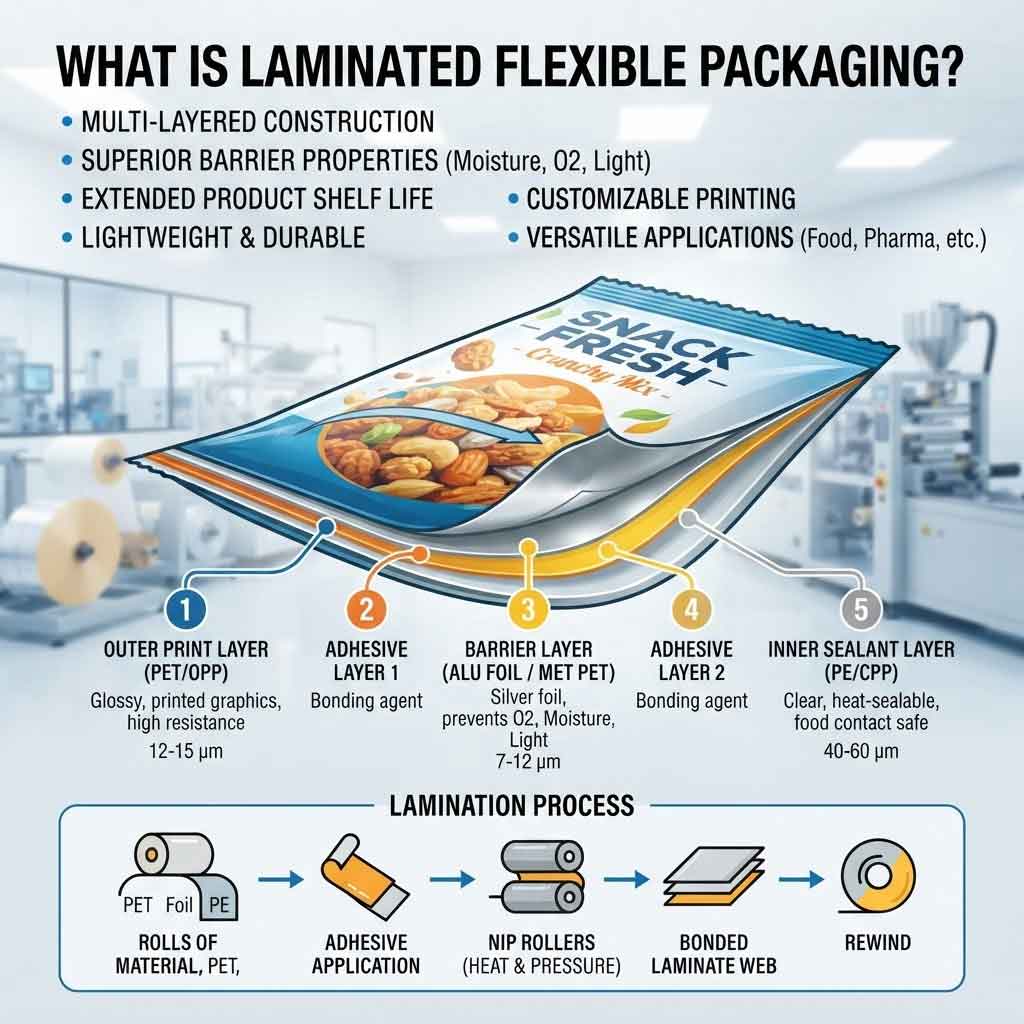
Laminated flexible packaging is a material made by bonding two or more films together. Each layer has its own job. The outer layer carries the print. The middle layer blocks oxygen, moisture, and light. The inner layer seals the bag. Together, they protect the product better than one film can.
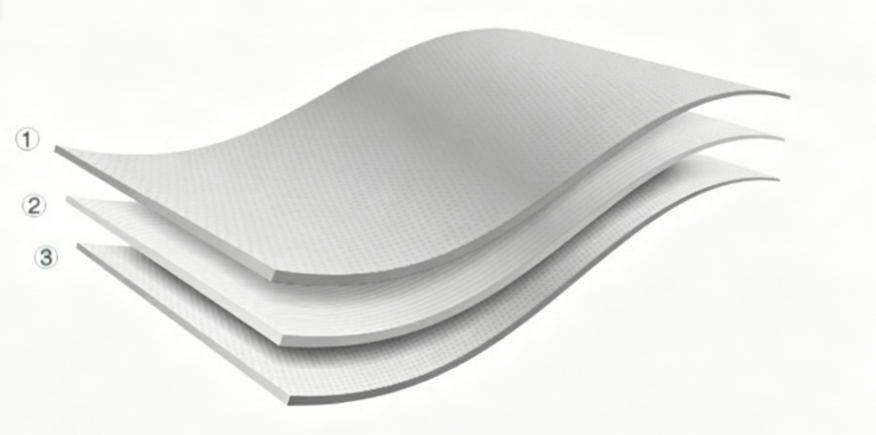
Many of my clients are not packaging experts. That is normal. A purchasing manager cares about cost and delivery. A brand founder cares about design. An OEM project manager cares about deadlines. But when I ask, "What material do you need?", many people are not sure. [Personal story: A snack brand owner once sent me a bag and said, "Make it like this." She did not know it was PET/VMPET/PE. We spent two days just to confirm the structure.] So in this article, I will explain the basics. I will cover what laminated packaging is, why we laminate, which materials we use, and how we combine them. After you read it, you can talk with any supplier with more confidence. Let us start with the simplest question.
What Exactly Is Laminated Flexible Packaging?
Many buyers see a pouch as one thin plastic film. That view often leads to the wrong material choice. Let me show you what is really inside the bag.
Laminated flexible packaging stacks two or more different films and bonds them with a lamination process. From inside to outside, it usually has a heat-seal layer, a barrier layer, and a printing layer. Each layer does one job, and together they form one strong material.
Think of It Like Your Winter Clothes
I like to explain this with clothes. In winter, I wear three layers. The inner layer takes away sweat. The middle layer keeps me warm. The outer layer stops the wind. No single piece can do all three jobs well. A packaging bag works the same way.
| Position | Clothing Example | Packaging Layer | Main Job |
|---|---|---|---|
| Inner | Base layer that takes away sweat | Heat-seal layer | Seals the bag and touches the product |
| Middle | Sweater that keeps you warm | Barrier layer | Blocks oxygen, moisture, and light |
| Outer | Jacket that stops the wind | Printing layer | Shows your design and resists wear |
What Does "Lamination" Mean?
Clothes are separate pieces. You can take them off one by one. Packaging films are different. We glue them together into one sheet. This step is called lamination. In our factory, we use adhesive to bond the films with heat and pressure. After the glue dries fully, the layers act like one material. They stay together during filling, shipping, and daily use. If the bond is weak, the layers can peel apart. So I always check bond strength before the film goes to bag making.
Why Can't One Film Do the Job Alone?
Some buyers ask me for a single-layer bag to save money. It sounds smart. But it often leads to leaks, poor printing, or food that spoils early.
One film cannot meet all needs. PE seals well but blocks little oxygen. PET prints well but cannot heat seal. Aluminum foil blocks almost everything but cracks easily and costs more. When we laminate them, each film covers the weak points of the others.
The Strong and Weak Points of Single Films
Every film has good points. Every film also has weak points. I made a simple table to show this.
| Film | Good Points | Weak Points |
|---|---|---|
| PE | Seals well, low cost, works in cold temperatures | Poor barrier, cannot take high heat |
| PET | Great printing, high strength | Cannot heat seal, not enough for high barrier needs |
| AL (Aluminum Foil) | Blocks oxygen, moisture, and light very well | Not see-through, cracks when folded, high cost |
You can see the problem. If I use only PE, your coffee will go stale. If I use only PET, I cannot seal the bag. If I use only foil, the bag will crack and cost too much.
How the Three Films Work as a Team
Now let me put them together. I use PET as the outer layer. It gives sharp printing and high strength. It can handle pulling and rubbing during shipping. I use aluminum foil as the middle layer. It blocks oxygen and light, so the food stays fresh longer. I use PE as the inner layer. It seals tightly, so the bag does not leak. It is also soft and easy to use. [Personal story: A client's nut pouch went soft after one month. We changed it to PET/AL/PE, and the problem was solved.]
What Are the Core Benefits of Laminated Packaging?
Buyers want better protection. But they also want lower cost. These two goals often fight each other. Laminated packaging helps you get both at the same time.
Laminated packaging has three core benefits. First, the layers support each other, so the result is better than any single film. Second, it saves cost because expensive materials are used in thin layers. Third, the structure can be customized for each product, such as frozen, cooked, or powder foods.
Benefit 1: 1 + 1 > 2 Performance
A single film cannot give you great printing, high barrier, and easy sealing all at once. A laminated film can. The total result is better than the films used alone. That is what I mean by "1 + 1 > 2."
Benefit 2: A Better Balance of Cost and Performance
Aluminum foil is a high-barrier material. It is also expensive. Nobody makes a whole bag from thick foil. So we add only a thin foil layer in the middle. The bag still blocks oxygen and light. But the cost stays under control. For a purchasing manager, this balance matters a lot.
Benefit 3: Custom Structures for Different Products
Different products need very different bags. One structure cannot fit them all. In the table below, "/" means the films are laminated together.
| Product Type | Key Needs | Common Structure |
|---|---|---|
| Frozen food | Works in cold, resists puncture | PA/PE |
| Retort (high-heat cooked) food | High barrier, heat resistance | PET/AL/CPP |
| Drink powder and instant mixes | Blocks moisture and oxygen | PET/AL/PE |
Which Materials Are Most Common in Laminated Pouches?
Names like PET, NY, and CPP confuse many buyers. If you do not know them, you cannot judge a supplier's advice. Here is a simple guide for you.
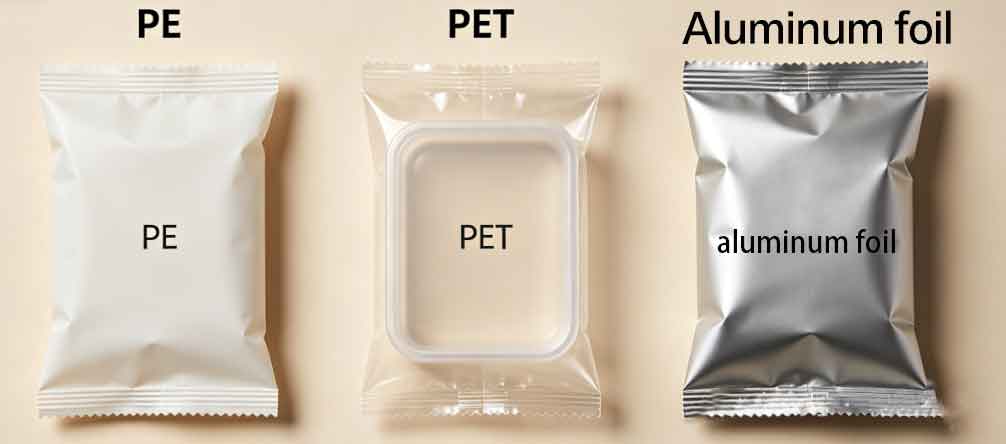
The six most common materials are PET, PA (nylon), PE, CPP, aluminum foil, and VMPET. PET is used for printing. PA adds puncture resistance. PE and CPP are used for sealing. Aluminum foil and VMPET are used to block oxygen, moisture, and light.
A Quick Look at the Six Materials
| Material | Key Features | Good Points | Weak Points |
|---|---|---|---|
| PET (Polyester) | Great printing, strong, works from -70°C to 150°C, medium barrier | Bright colors, keeps its shape, good for the outer layer | Tears easily once cut, cannot heat seal |
| PA / NY (Nylon) | Tough, resists puncture and stretching, works in cold, good gas barrier | Stops broken bags and leaks, good for sharp or bony products | Absorbs moisture, so humidity can weaken its barrier |
| PE (Polyethylene) | Seals very well, safe, no smell, soft, works in cold | Strong seals, safe for food contact, low cost | Poor heat resistance, average barrier, average printing |
| CPP (Cast Polypropylene) | Heat resistant, stiff, seals well, can be boiled or steamed | Survives high-heat sterilization, good for cooked food | Less soft than PE, can become brittle in cold |
| AL (Aluminum Foil) | Top barrier, blocks light, light weight | Best freshness, longer shelf life | Cracks when folded, cannot heat seal, high cost, not see-through |
| VMPET (Metallized PET) | A thin aluminum coating on PET | Shiny metal look, good barrier, lower cost than foil | Barrier is lower than real foil |
How I Use This Table With Clients
When a packaging engineer asks me for advice, I start with the product. Is it sharp? Is it frozen? Will it be cooked in the bag? Then I match the material to the need. For example, I suggest PA for frozen shrimp or bone-in meat. I suggest CPP for food that goes through high-heat cooking. I suggest VMPET for brands that want a shiny look on a budget.
How Do These Materials Combine Into Common Structures?
Knowing single materials is only half the story. Many buyers still pick the wrong structure. The right mix depends on your product and how many layers you need.
Most structures follow one rule: printing layer + barrier layer + sealing layer. Two-layer PET/PE suits simple daily packaging. Three-layer PET/(VMPET, AL, or NY)/(PE or CPP) is the general choice. Four-layer PET/AL/NY/PE or CPP suits high-heat sterilized products and longer shelf life.
Sorting Materials by Their Job
First, I sort the six materials by the job they do. This makes the choice much easier.
| Layer | Materials | Job |
|---|---|---|
| Printing layer (outside) | PET | Shows the design and gives strength |
| Barrier layer (middle) | VMPET, AL, NY | Blocks oxygen, moisture, light, or puncture |
| Heat-seal layer (inside) | PE, CPP | Seals the bag and touches the product |
Choosing the Number of Layers
Next, I decide how many layers the product needs. More layers are not always better. More layers also mean more cost.
| Structure | Example | Best For |
|---|---|---|
| Two layers | PET/PE | Simple daily packaging with low barrier needs |
| Three layers | PET/VMPET/PE, PET/AL/PE, PET/NY/CPP | Most foods and general use |
| Four layers | PET/AL/NY/PE or PET/AL/NY/CPP | High-heat sterilized foods and long shelf life |
For the three-layer option, I pick the middle layer by the need. I use NY if the product needs puncture resistance. I use CPP inside if the bag must take high heat. [Personal story: An OEM client had five SKUs in one project. We set two structures for all five, which made their orders much simpler.]
Should You Use Both AL and VMPET in One Bag?
Some new buyers think more barrier layers mean more protection. So they ask for foil and VMPET together. This idea wastes money and can even lower performance.
No, I do not recommend it. AL and VMPET do the same job, so the barrier does not double. Small pinholes and scratches in each layer can add up, so the result may be worse than one foil layer. The cost also goes up with little real value.
Reason 1: The Same Job Twice
AL and VMPET are both metal barrier layers. They block the same things. When I put them together, the barrier does not become "1 + 1 = 2." Every metal layer has tiny pinholes or scratches. With two metal layers, the chance of these flaws goes up. In real use, the bag can perform worse than a bag with one good foil layer.
Reason 2: Higher Cost, Low Value
Two metal layers mean higher material cost. The bag also gets stiffer and harder to process. In real production, this structure has almost no business value.
| Structure | Barrier | Cost | My Advice |
|---|---|---|---|
| PET/AL/NY/PE | Very high, stable | Reasonable | Recommended |
| PET/AL/VMPET/PE | Not better, more flaw risk | Higher | Not recommended |
My Rule: No Material Is Best for Everything
I tell every client the same thing. No material is good or bad by itself. The best structure is the one that fits your product and your budget. So I always ask about your product first. Then I suggest the structure.
Conclusion
Laminated packaging stacks films so each layer does one job. When you know the materials and structures, you can choose the right bag with lower cost and less risk.