What Are Stand-Up Pouches and Why Do Food Brands Love Them?
Your product is good. But on a busy shelf, a flat bag falls over and gets ignored. I see stand-up pouches fix this problem for food brands every week.
A stand-up pouch is a flexible bag with a bottom gusset. The gusset opens when you fill the bag, so the bag stands on its own. Brands love it because it stands out on the shelf, protects the product well, costs less to ship, and gives a large print area.
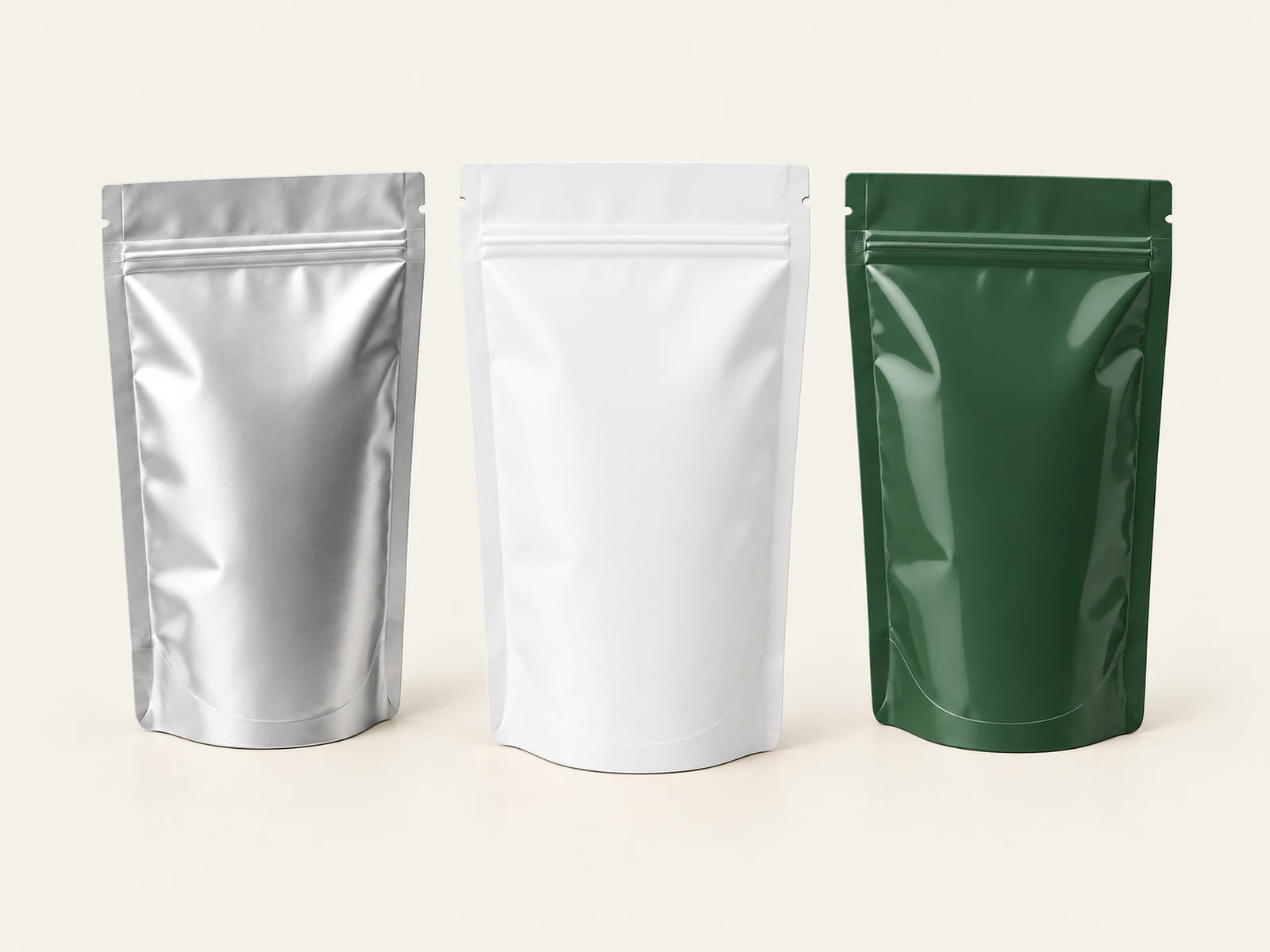
In today's food market, packaging does more than protect a product. It is the first thing a shopper sees and touches[^1]. I have worked with stand-up pouches at Sorbar for many years. I have watched small brands grow with them. I have also seen big factories cut costs with them. In this article, I will share what I have learned. Please keep reading, because the last part shows the simple method our factory uses to pick the right pouch every time.
Why Do So Many Industries Choose Stand-Up Pouches Over Flat Bags?
Flat bags lie down on the shelf. Shoppers walk past them. Your brand loses sales. I have seen stand-up pouches solve this simple problem for many clients.
Many industries choose stand-up pouches because the bag stands upright and shows the full front design. The pouch also uses less material than jars or cans[^2], keeps products fresh with barrier films, and lowers shipping costs. It works for food, pet food, coffee, snacks, and household products.
How Does the Structure Work?
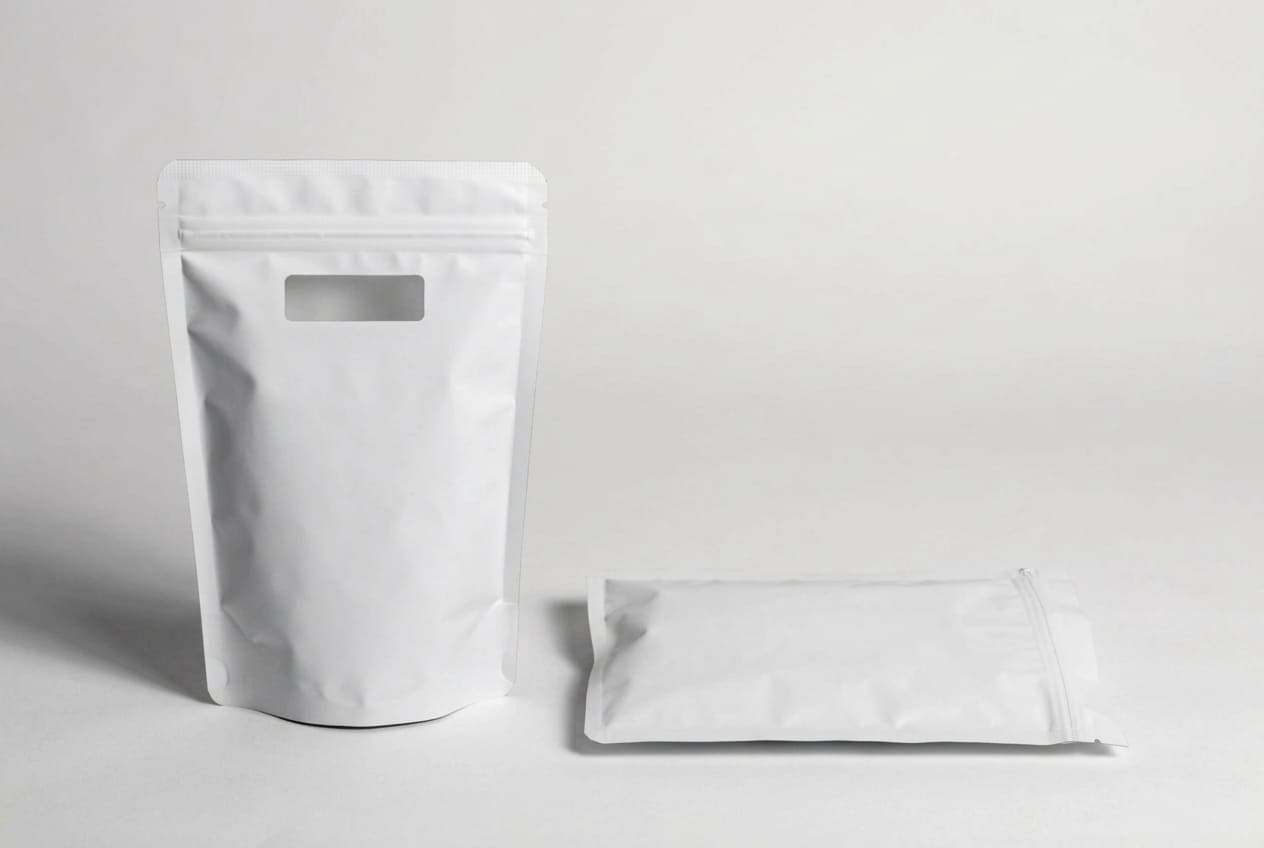
A stand-up pouch has a front panel, a back panel, and a bottom gusset. The gusset is a folded piece of film at the base. When I fill the pouch, the gusset opens and forms a flat base. So the bag stands up by itself. Some designs also add side gussets or a square bottom for more stability.
Flat Bag vs. Stand-Up Pouch
| Feature | Flat Pouch | Stand-Up Pouch |
|---|---|---|
| Shelf display | Lies flat or needs a hook | Stands upright and faces the shopper |
| Print area | Front and back only | Front, back, and bottom |
| Capacity | Limited | Larger for the same width |
| Brand visibility | Low | High |
| Use at home | Hard to store after opening | Easy to reseal and stand in a cupboard |
Which Industries Use Them?
I see stand-up pouches in snacks, coffee, tea, milk powder, pet food, baby food, sauces, and even detergent. Last year, a nut brand switched from flat bags to our pouches. Their retailer gave them a better shelf spot because the bags looked neat and full. The product did not change. Only the bag changed.
What Types of Stand-Up Pouches Can You Choose From?
Many buyers think all stand-up pouches are the same. They pick the wrong type and face leaks or poor sales. I want to show you the five main types.
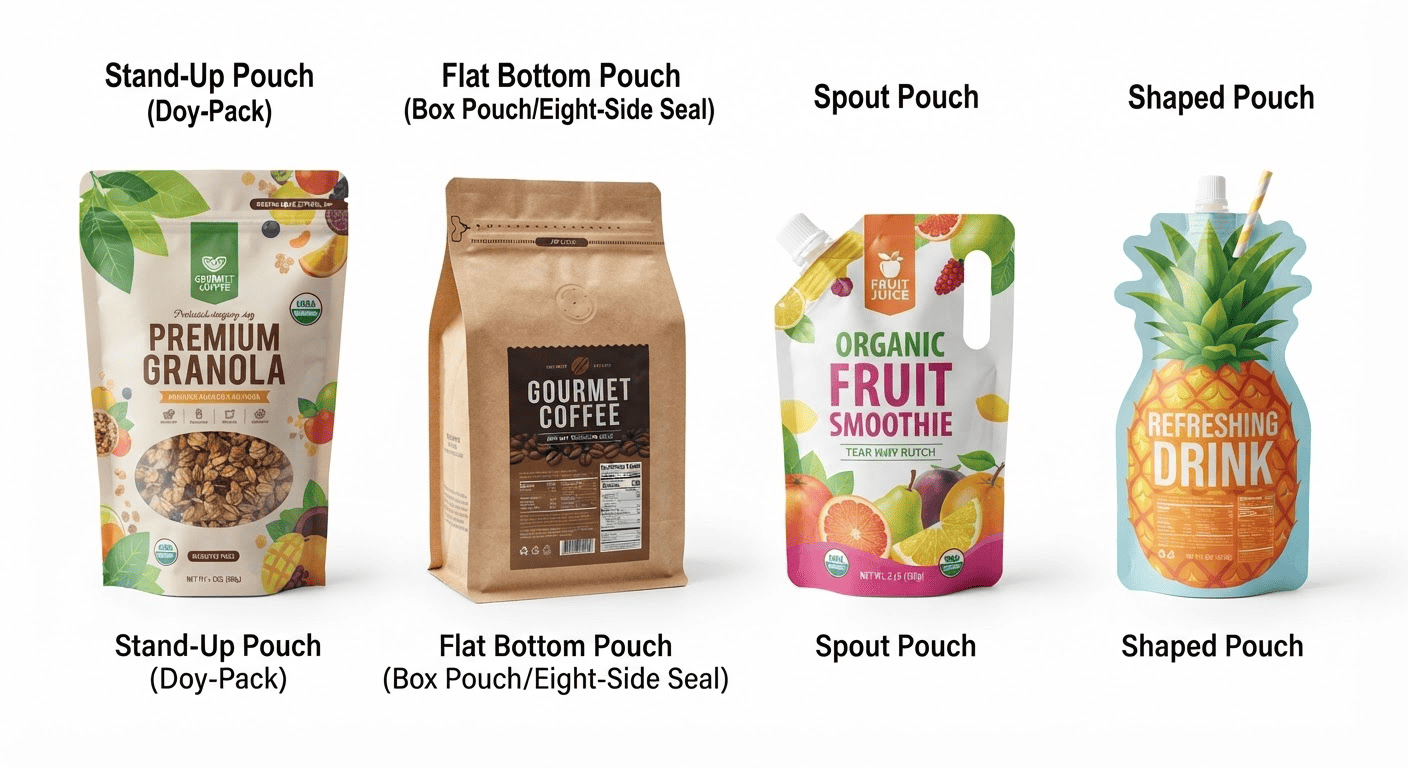
There are five common types of stand-up pouches: the standard stand-up pouch, the zipper stand-up pouch, the spout pouch, the eight-side seal (flat bottom) pouch, and the shaped stand-up pouch. Each type fits different products, from dry snacks to liquids and premium gifts.
The Five Main Types at a Glance
| Type | Key Feature | Best For |
|---|---|---|
| Standard stand-up pouch | Simple structure, no reclose | Single-use packs, refills, samples |
| Zipper stand-up pouch | Resealable zipper at the top | Snacks, dried fruit, powder, pet treats |
| Spout pouch | Plastic spout and cap | Juice, jelly drinks, baby food, sauces |
| Eight-side seal pouch | Flat bottom and five print panels | Coffee, premium pet food, large packs |
| Shaped stand-up pouch | Custom die-cut outline | Kids' snacks, gifts, seasonal products |
How Do These Types Differ in Real Use?
The standard pouch is the lowest cost choice. It works well when the consumer uses the product in one go. The zipper pouch costs a little more, but it keeps food fresh after opening. The spout pouch is the best choice for liquids because the cap stops leaks. The eight-side seal pouch stands very steady, and it looks like a box on the shelf. The shaped pouch is the most eye-catching, but it needs a custom cutting tool.
My Advice
I always ask one question first: "How will your customer open and use this product?" The answer usually tells me which type to pick.
What Are the Main Benefits of Stand-Up Pouches in Packaging?
Rigid jars cost more to ship. They take up space in your warehouse. Your margin gets smaller. Stand-up pouches give you a lighter and smarter choice.
The main benefits of stand-up pouches are strong shelf appeal, good product protection, lower shipping and storage costs[^3], easy use for consumers, and less packaging material. A pouch also weighs much less than a glass jar or metal can of the same size.
Shelf Appeal
A pouch stands like a small billboard. The large flat panels give your design room to shine. Shoppers see your logo before they see the price.
Product Protection
I build each pouch from layers of film. Each layer has a job. One layer blocks oxygen. One layer blocks moisture. One layer seals the bag.[^4] So your food stays fresh for longer.
Cost Savings
| Item | Rigid Jar or Can | Stand-Up Pouch |
|---|---|---|
| Weight | Heavy | Very light |
| Empty storage | Takes full space | Ships and stores flat |
| Freight cost | High | Lower |
| Material use | More | Less |
Consumer Convenience
Consumers like pouches because they are easy to carry, easy to open, and easy to reseal. A pouch also fits well in a drawer or a lunch bag. One of my clients told me their repeat orders went up after they added a zipper. Their customers simply found the pack easier to use.
Which Custom Design Options Can You Add to a Stand-Up Pouch?
A plain pouch looks like every other pouch. Shoppers do not remember it. Small design details can change that, and I help clients pick them every day.
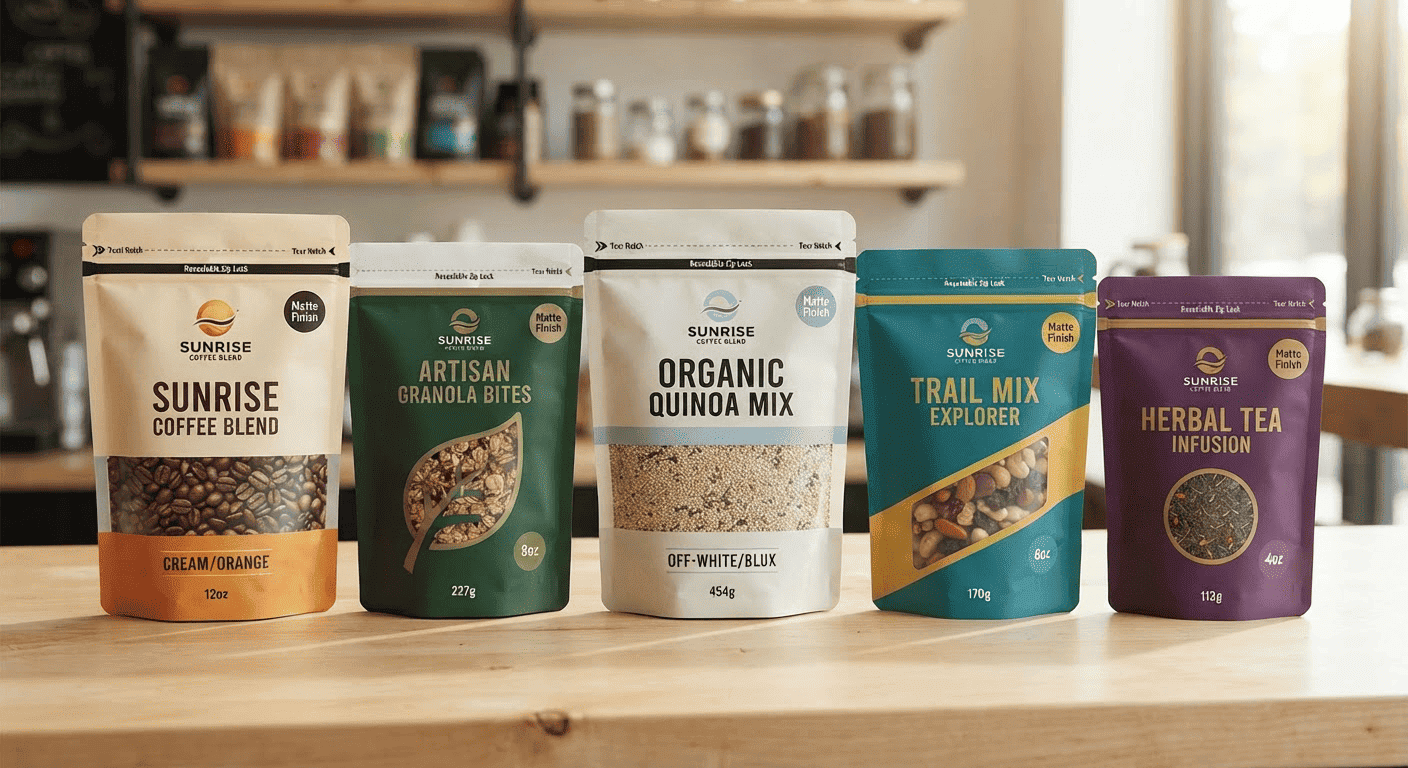
You can customize a stand-up pouch with functional features like tear notches, zippers, hang holes, clear windows, spouts, and degassing valves. You can also choose surface finishes such as matte, gloss, soft-touch, spot UV, or metallic effects. Size, shape, material, and printing are all customizable too.
Functional Features
| Feature | What It Does | Good For |
|---|---|---|
| Tear notch | Lets users open the bag by hand | Almost all pouches |
| Zipper (press-to-close or slider) | Lets users reseal the bag | Snacks, powder, pet food |
| Hang hole (round or euro slot) | Lets stores hang the bag on hooks | Candy, spices, small packs |
| Clear window | Shows the product inside | Granola, nuts, dried fruit |
| Degassing valve | Lets gas out but keeps air out | Fresh roasted coffee |
| Spout and cap | Lets users pour or squeeze | Liquids and purees |
| Rounded corners | Makes the bag safer and softer | Baby food, kids' snacks |
| Handle | Makes heavy bags easy to carry | Rice, large pet food bags |
Surface Finishes
| Finish | Look and Feel | Best For |
|---|---|---|
| Gloss | Bright and shiny | Bold, colorful brands |
| Matte | Soft and calm, no glare | Natural and premium brands |
| Soft-touch | Smooth, velvet feel | High-end gifts |
| Spot UV | Shiny parts on a matte base | Logos and key words |
| Hot stamping | Gold or silver metallic effect | Luxury products |
| Kraft paper look | Brown, natural texture | Organic and eco brands |
My Tip
A new brand founder once asked me for every feature on this list. I suggested three instead: a matte finish, a window, and a zipper. The pouch looked clean, and the cost stayed low. More features do not always mean a better pouch.
What Do Buyers Look At When They Choose Stand-Up Pouches?
Many buyers focus only on price. Then the bags fail the filling test or arrive late. I always ask my clients to look at the full picture.
Buyers usually look at six key factors: barrier performance, material safety, price, MOQ, lead time, and fit with their filling line. These factors matter because a cheap pouch that leaks, fades, or jams the machine costs much more in the end.
The Six Key Factors
| Factor | Why It Matters |
|---|---|
| Barrier performance | It decides how long the food stays fresh |
| Material safety | Food contact materials must meet food-grade rules[^5] |
| Price | It affects your product margin |
| MOQ | It decides how much stock you must buy at once |
| Lead time | It affects your launch date and stock plan |
| Filling line fit | A poor fit slows down or stops production |
Different Buyers, Different Priorities
I work with many types of buyers. Each one looks at the pouch in a different way.
| Buyer | Main Focus | Why |
|---|---|---|
| Purchasing manager at a food factory | Stable quality, on-time delivery, fair price | One bad batch can stop a whole line |
| Founder of a new brand | Design, low MOQ, fast samples | Cash flow is tight and speed matters |
| OEM project manager | Order accuracy, many SKUs, fast changes | One wrong artwork can ruin a client order |
| Packaging engineer | Specs, seal strength, machine fit | The pouch must work in real production |
I find that the best decisions happen when all these people share their needs early. So I often ask for a short call with both the buyer and the engineer before I quote.
How Do You Choose the Right Stand-Up Pouch Supplier?
A bad supplier can delay your launch. Wrong colors, late shipments, and slow replies hurt your brand. I have heard these stories from many new clients.
To choose the right stand-up pouch supplier, check if they are a real factory, ask for samples, review their quality control steps, and test their technical knowledge. Also look at their MOQ, lead time, and how fast they reply. A good supplier acts like a partner, not just a seller.
Check If They Are a Real Factory
A trader adds a middle cost. A trader also cannot control the production schedule. I suggest you ask for factory photos, a video call, or a site visit.
Test Samples Before Bulk Orders
A sample shows the real print quality, seal strength, and zipper feel. I always tell clients to test samples on their own filling line.
Ask Smart Questions
| Question to Ask | Sign of a Good Supplier |
|---|---|
| Do you own your production lines? | Yes, and they can show them |
| How do you check each batch? | They explain clear inspection steps |
| Which material do you suggest for my product? | They ask about your product first |
| What is your MOQ for a trial order? | They offer flexible options |
| How do you manage artwork for many SKUs? | They use clear proof and approval steps |
| What is your normal lead time? | They give a clear, honest date |
Why This Matters to Me
At Sorbar, we run our own lines, so we control quality and timing. I still believe every client should test us the same way. A good partner is happy to answer these questions.
How Do I Choose the Right Stand-Up Pouch for Each Product?
Many pouch problems start with the wrong choice of bag. Leaks, damp powder, and cracked seals all cost money. I use a simple four-step method to avoid them.
I choose a stand-up pouch based on four things: product form, storage time, cost budget, and filling method. Each factor points to a clear choice. For example, liquids need spout pouches, long shelf life needs aluminum foil layers, and auto filling lines need standard sizes.
In our factory, I do not use complex analysis to pick a pouch. I look at four simple points. Each point leads straight to a solution.
Step 1: Choose by Product Form
| Product Form | Examples | Recommended Pouch | Why |
|---|---|---|---|
| Solid | Milk powder, milk tablets, solid drinks | Zipper stand-up pouch | Users can open and close it many times, so the product stays dry |
| Solid (premium) | High-end powder | PET/AL/PE foil zipper pouch | The foil layer gives a much stronger barrier |
| Liquid or semi-solid | Yogurt, milk drinks, cheese sauce | Spout stand-up pouch with a sealed cap | The spout stops leaks |
| Chilled liquid | Low-temperature yogurt | Spout pouch with cold-resistant PE (≥0.1mm) | The thick PE layer does not crack in the fridge |
| Granules | Cereal milk powder, cheese bits | NY/PE stand-up pouch | Nylon resists punctures during shipping[^6] |
Step 2: Choose by Storage Time
| Storage Time | Recommended Material | Why |
|---|---|---|
| Short (≤3 months) | Single-layer PE or PET/PE | It keeps costs low |
| Medium (3–6 months) | [PET/VMPET/PE | It gives better barrier at a fair price](https://repository.rit.edu/cgi/viewcontent.cgi?article=1043&context=japr)[^7] |
| Long (≥6 months) | PET/AL/PE foil laminate | It blocks light, moisture, and oxygen |
| Cold (0–4°C) | Cold-resistant PE | It stops the bag body and seals from cracking |
Step 3: Choose by Cost Budget
| Product Level | Examples | Recommended Pouch |
|---|---|---|
| Low cost, high volume | Trial packs, budget milk tablets | Single-layer PE pouch, no zipper |
| Mid-range | Regular milk powder, yogurt | PET/PE zipper pouch (best value) |
| Premium | Organic milk powder, freeze-dried yogurt | PET/AL/PE foil pouch |
Step 4: Choose by Filling Method
| Filling Method | What You Need | Key Point |
|---|---|---|
| Automatic filling line | Standard sizes, flat bag mouth, neat seal edges | It must run at 80–120 bags per minute[^8] |
| Manual filling | Custom sizes are fine | The seal must be flat to avoid leaks |
Why This Method Works
I once had a dairy client who chose a thin PE pouch for chilled yogurt. The seals cracked in the cold room within a week. We moved them to a thicker cold-resistant PE structure, and the problem stopped. Since then, I always check these four points before I suggest any pouch. This method saves my clients time, money, and stress.
Conclusion
Stand-up pouches help food brands stand out, stay fresh, and save costs. When you pick the right type, features, and supplier, your packaging works harder for your brand.
[^1]: "The Impact of Visual Elements of Packaging Design on ... - PMC", https://pmc.ncbi.nlm.nih.gov/articles/PMC11851823/. Consumer research, including eye-tracking studies at the point of sale, shows that packaging design affects shopper attention and product choice. Evidence role: expert_consensus; source type: paper. Supports: Packaging is the first thing a shopper sees and touches.. Scope note: Does not test stand-up pouches specifically.
[^2]: "Guide to Life Cycle Assessment (LCA) of Packaging", https://www.zacrosamerica.com/news/guide-to-life-cycle-assessment-of-packaging/. Comparative life-cycle studies of flexible and rigid packaging report a lower packaging mass per unit of product for flexible pouches than for glass jars or metal cans. Evidence role: statistic; source type: research. Supports: Stand-up pouches use less material than jars or cans.. Scope note: Results vary by pack size, material structure, and the assumptions of each study.
[^3]: "The Hidden Costs of Shifting Away from Flexible Packaging", https://pubmed.ncbi.nlm.nih.gov/42793974/. Packaging logistics research describes how empty flexible packaging ships and stores flat, so far fewer truckloads are needed than for the same number of pre-formed rigid containers. Evidence role: mechanism; source type: research. Supports: Stand-up pouches lower shipping and storage costs.. Scope note: Supports the general mechanism; actual cost savings depend on the specific supply chain.
[^4]: "Multilayered packaging", https://en.wikipedia.org/wiki/Multilayered_packaging. Reviews of multilayer food packaging films explain how layers are combined so that each one provides a specific property, such as an oxygen or moisture barrier or heat sealability. Evidence role: mechanism; source type: paper. Supports: Each layer of a laminate film serves a separate barrier or sealing role.. [^5]: "Food Contact Materials - Regulation (EC) 1935/2004", https://www.europarl.europa.eu/RegData/etudes/STUD/2016/581411/EPRS_STU(2016)581411_EN.pdf. Regulators such as the US FDA and the European Commission set legal requirements for materials intended to contact food, including those used in plastic packaging. Evidence role: definition; source type: government. Supports: Food contact materials must meet food-grade rules.. Scope note: Requirements differ by jurisdiction.
[^6]: "Biax Oriented Nylon Film USA – Durable Packaging ...", https://www.pilcherhamilton.com/biax-oriented-nylon/. Technical references on polyamide packaging films note their high puncture and abrasion resistance, which is why they are used in laminates for sharp or granular products. Evidence role: mechanism; source type: encyclopedia. Supports: Nylon resists punctures during shipping.. Scope note: Does not directly measure performance during shipping.
[^7]: "Comparing Optimum Barrier Variables of Aluminium and ...", https://repository.rit.edu/cgi/viewcontent.cgi?article=1043&context=japr. Studies of vacuum-metallized films report much lower oxygen and water vapor transmission rates than for uncoated PET. Evidence role: statistic; source type: paper. Supports: PET/VMPET/PE gives a better barrier at a fair price.. Scope note: Supports the barrier comparison only, not the claims about price.
[^8]: "Stand Up Pouch Packing Machine", https://landpackmachine.com/collections/stand-up-pouch-packing-machine. Equipment specifications and packaging engineering references give typical throughput ranges for automatic premade pouch filling machines. Evidence role: statistic; source type: other. Supports: Automatic filling lines run at 80–120 bags per minute.. Scope note: Speeds vary widely by machine type, pouch size, and product.