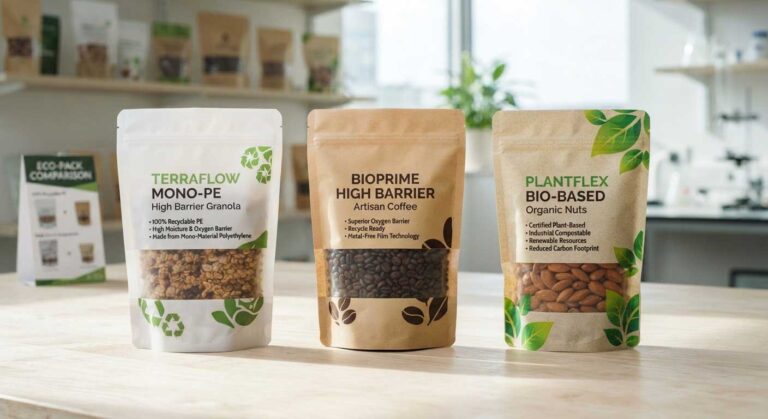
Many buyers see PPWR as just another green rule. This mistake can put your EU sales at risk. I will explain what the law requires and how you can prepare.
The EU PPWR is a packaging law that covers the full packaging life cycle. It includes materials, harmful substances, recyclability, recycled content, packaging reduction, reuse, labels, compliance documents, and waste duties. It generally applies from 12 August 2026.
I talk with packaging buyers often, and many of them ask me the same question: "Is my pouch still okay for Europe?" The answer depends on more than the pouch material. In this article, I will break PPWR into simple parts. I will also show you how mono-material and compostable pouches can support your plan.
What Is the EU PPWR?
Many companies hear about PPWR but do not know where to start. Delays can leave less time for changes. A clear overview is the best first step.
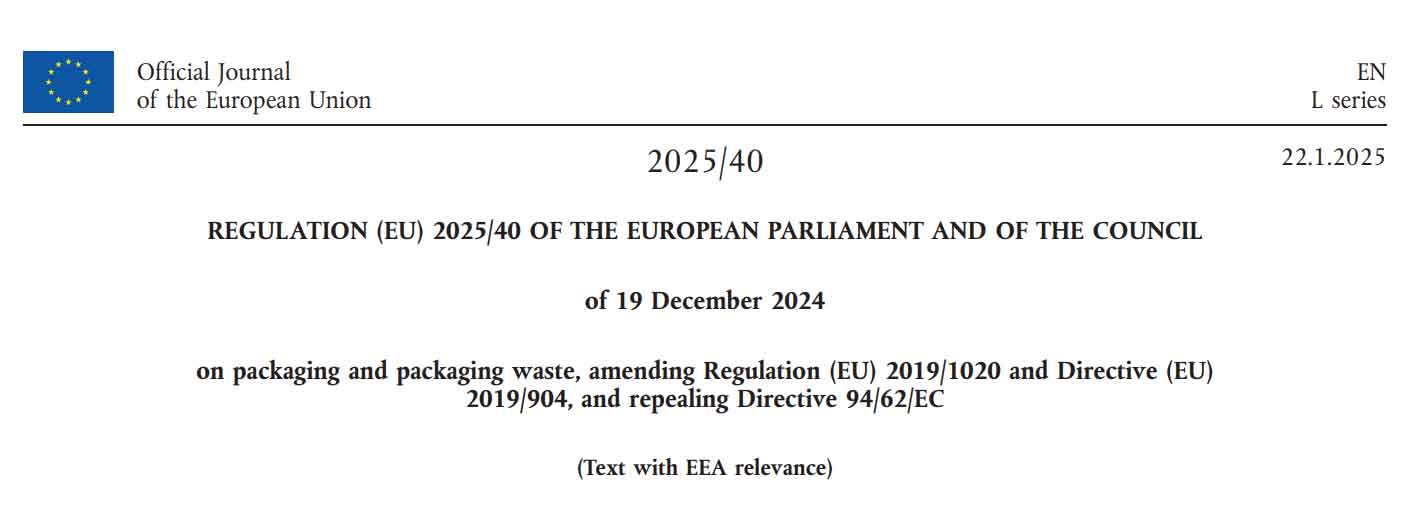
PPWR stands for the Packaging and Packaging Waste Regulation. Its official number is Regulation (EU) 2025/40. It replaces Directive 94/62/EC and sets shared packaging rules for the EU market. Its goals include less unnecessary packaging, more reuse and recycling, and a circular economy.
Why Does the Change From Directive to Regulation Matter?
The old law was a Directive. Each member state had to turn it into national law, so the rules could differ between countries. PPWR is a Regulation, so it applies directly in EU member states. This change aims to reduce differences between national rules. It also makes PPWR much more than a small update to the old law. The EU has rebuilt its packaging rules as a complete system.
What Are the Key Dates?
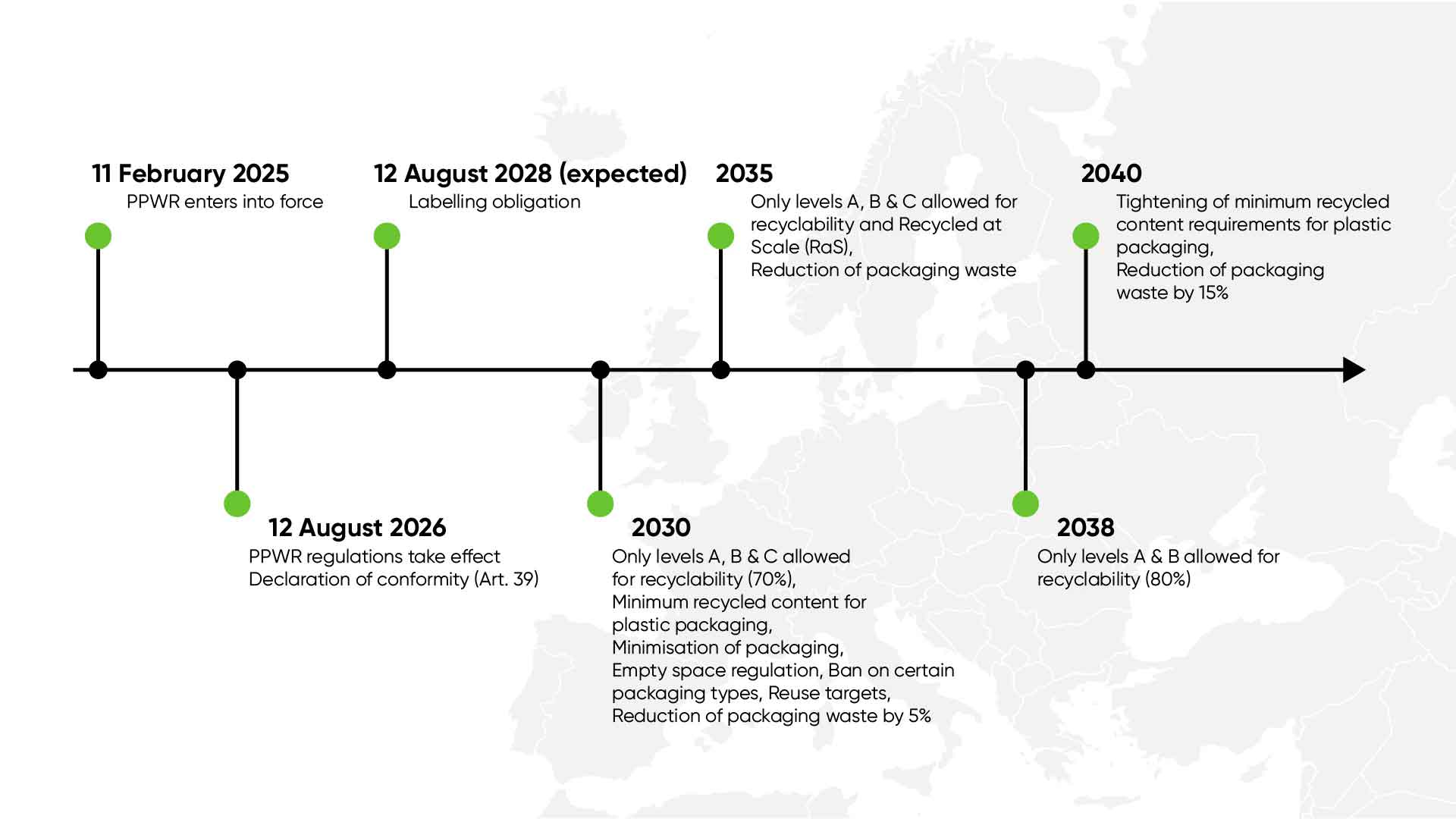
I suggest that you mark these dates in your packaging plan. The later stages will raise requirements step by step, so you should not look only at 2026.
| Date | What Happens |
|---|---|
| 22 January 2025 | The EU published PPWR |
| 11 February 2025 | PPWR entered into force |
| 12 August 2026 | PPWR generally applies |
| 2030, 2035, 2038, and 2040 | Requirements increase in stages |
These stages cover recyclability, recycled content, packaging reduction, and reuse. An early review gives your team more time to test new materials and update your artwork.
What Packaging Does PPWR Cover?
Some companies think PPWR only affects plastic. This belief can leave paper, glass, and metal packaging unchecked. You should review every packaging layer that enters the EU.
PPWR covers all packaging and packaging waste, whatever the material or source. This includes industrial, retail, and household packaging. Plastic, paper, glass, metal, wood, and composite packaging may all fall within its scope. PPWR is not only a plastic packaging law.

Why Is Plastic Not the Only Concern?
Plastic gets a lot of attention because recycled content rules are very important for this material. But other materials can also fall under PPWR. A paper box or a composite pack still needs a proper review.
Which Packaging Layers Should You Check?
One product may use several types of packaging. I always suggest that buyers list every layer before they make any changes.
| Packaging Layer | Example |
|---|---|
| Sales packaging | A coffee pouch |
| Grouped packaging | A color box that holds several pouches |
| Transport packaging | A shipping carton |
| E-commerce packaging | A mailer or an online order box |
| Service packaging | Packaging filled at the point of sale |
Each layer needs its own review. For example, a pouch may sit in a color box, and that box may sit in a shipping carton. You need to check the role and the requirements of each item. This is why a pouch change alone may not solve the whole problem. Your team should look at the full packaging system.
How Can You Understand the PPWR Framework?
PPWR has many articles, and they can feel overwhelming. Teams can easily miss key duties. A four-layer framework makes the law much easier to follow.
You can understand PPWR through four questions. What must the packaging be like? Who is responsible for it? How do you prove compliance? What happens after use? These four questions connect the main articles and show how the system works.

What Are the Four Layers of PPWR?
When I first read PPWR, I felt lost in the details. The law became much clearer after I sorted it into four layers.
| Layer | Key Question | Main Topics |
|---|---|---|
| Packaging requirements | What must the packaging be like? | Articles 5–12: substances, recyclability, recycled content, compostability, minimisation, reuse, and labels |
| Responsible parties | Who is responsible? | Articles 15–22: manufacturers, suppliers, authorised representatives, importers, distributors, and fulfilment service providers |
| Proof of compliance | How do you prove it? | Article 38, Annex VII, and Article 39 |
| After-use system | What happens after use? | Excessive packaging, reuse and refill, producer registration, EPR, collection, and recycling |
How Can Your Team Use This Framework?
Your team can use these layers as a working checklist. Your technical team can review the packaging itself. Your purchasing team can collect supplier data. Your compliance team can prepare the Technical Documentation and the EU Declaration of Conformity. Your management team can review EPR duties and costs. This approach gives each person a clear task.
What Substances Does PPWR Restrict?
A recyclable pouch can still have a compliance problem. Hidden substances in inks or coatings can create risk. You should start with a clear material list.
Article 5 sets requirements for substances in packaging. One key new rule limits PFAS in food-contact packaging from 12 August 2026. Companies should know what is in their materials, additives, coatings, inks, and adhesives. They should also confirm which limits apply.
What Should You Check in Your Packaging?
Before we talk about the circular economy, we need to look at material safety and environmental risk. A pouch has many parts, and each part can matter.
| Item to Check | Question to Ask |
|---|---|
| Material structure | What materials are in each layer? |
| Additives | What additives does the material contain? |
| Coatings | Does the pack use a special coating? |
| Inks | Which inks does the printing process use? |
| Adhesives | Which adhesives hold the layers together? |
| End use | Will the packaging touch food? |
Why Is PPWR More Than a Recycling Law?
PPWR combines chemical compliance, environmental compliance, and circular economy goals. This means a good recycling story is not enough. Food factory buyers and packaging engineers should ask for material information early. I find that early checks are much easier than last-minute changes. They give your team time to review the data and test another option if needed.
What Does Recyclability Mean Under PPWR?
Many brands call their pouch recyclable because the material can be recycled. This claim may be incomplete. You need to check how the whole pack works in recycling.
Under Article 6, packaging must move toward recyclability. It must be designed for material recycling. After use, it should be collected, sorted, and recycled at scale. A recyclable material alone does not prove that the packaging meets the design requirements.
Why Is a Recyclable Material Not Enough?
This is the point that I explain most often. A mono-material pouch can enter a recycling system. But the pouch is not the only part that matters. Labels, adhesives, inks, and closures can all affect the result. The box or carton around the pouch also needs a review.
What Does Design for Recycling Look Like?
Design for Recycling, or DfR, looks at the whole packaging system. The real question is simple: can the packaging enter the target recycling stream and go through sorting, processing, and material recovery?
| Common Question | Better Question |
|---|---|
| Can this material be recycled? | Can this full pack be recycled in the target stream? |
| Is the pouch mono-material? | Do the label, ink, adhesive, and closure support recycling? |
| Is the pouch ready? | Have we reviewed the box and carton too? |
For this reason, I suggest that you check the structure before you approve the artwork. A small design choice can affect the final result.
Should All Packaging Become Compostable?
Some brands rush to compostable packaging because it sounds greener. This choice may not suit the product or local waste system. You should choose based on the real end-of-life path.
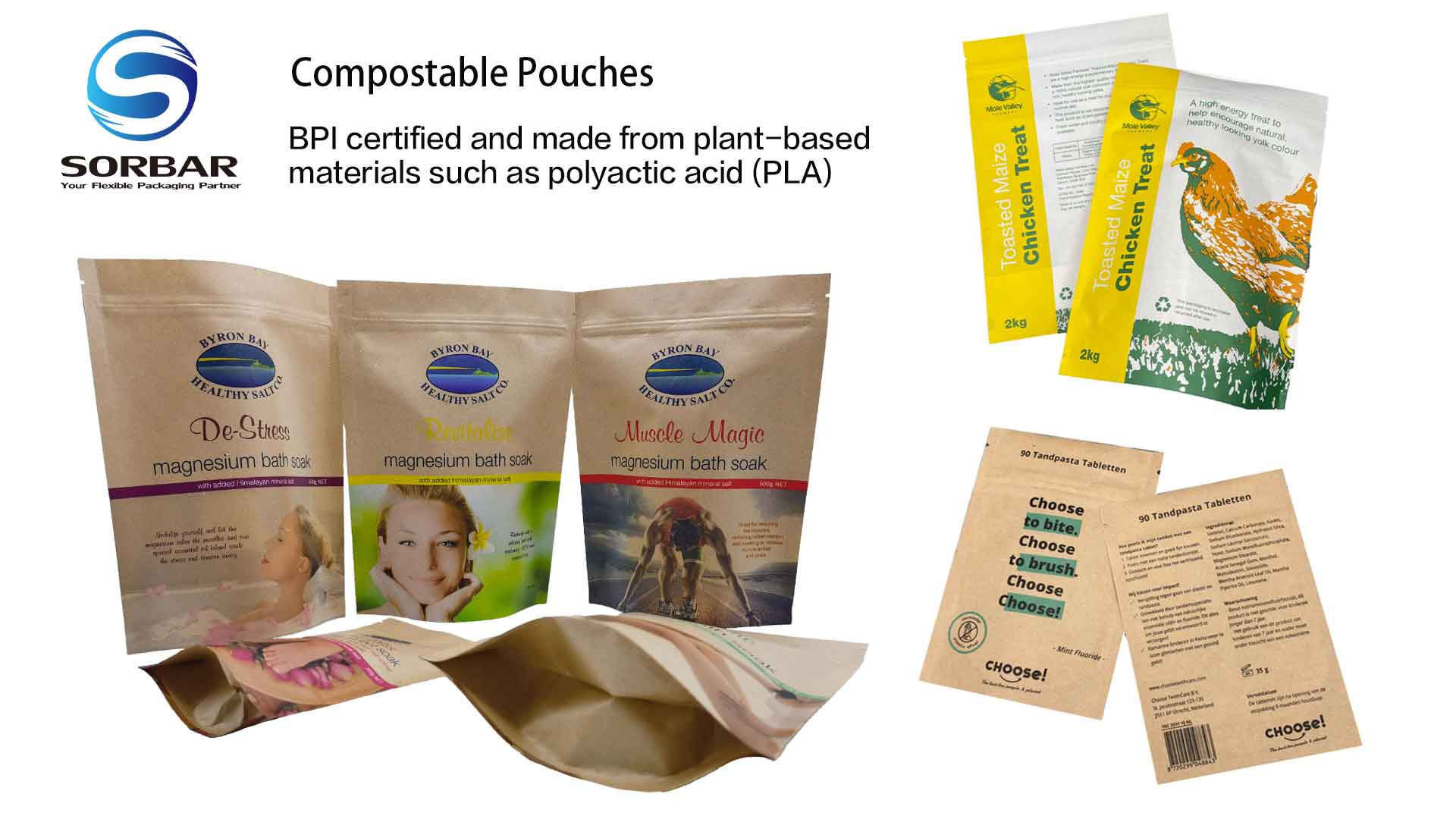
No. PPWR does not say that all packaging should become compostable. Recyclable, reusable, and compostable options are not simply good, better, and best. The right choice depends on the packaging use, material, waste stream, collection system, and final treatment path.
Why Is There No Single Best Option?
Buyers often ask which material is the greenest. The honest answer is that it depends on the product. A material only works well when it matches the product and the waste system.
Which Questions Can Guide Your Choice?
| Decision Factor | Question to Ask |
|---|---|
| Packaging use | What must the packaging protect? |
| Material | Does the material meet the product's needs? |
| Waste stream | Where will consumers put the pack after use? |
| Collection system | Can the local system collect this pack? |
| Final treatment | Will the pack reach the planned treatment path? |
These questions can stop you from choosing a material based on a trend. A compostable pouch can be a good choice when the use and disposal path support it. A recyclable pouch can be a better choice when the pack can enter a suitable recycling stream. You should test the option with your real product before you place a large order.
How Can Mono-Material and Compostable Pouches Help You Respond to PPWR?
Changing your packaging can feel risky. A poor choice can waste time and budget. The right pouch and a capable factory can make your transition much easier.
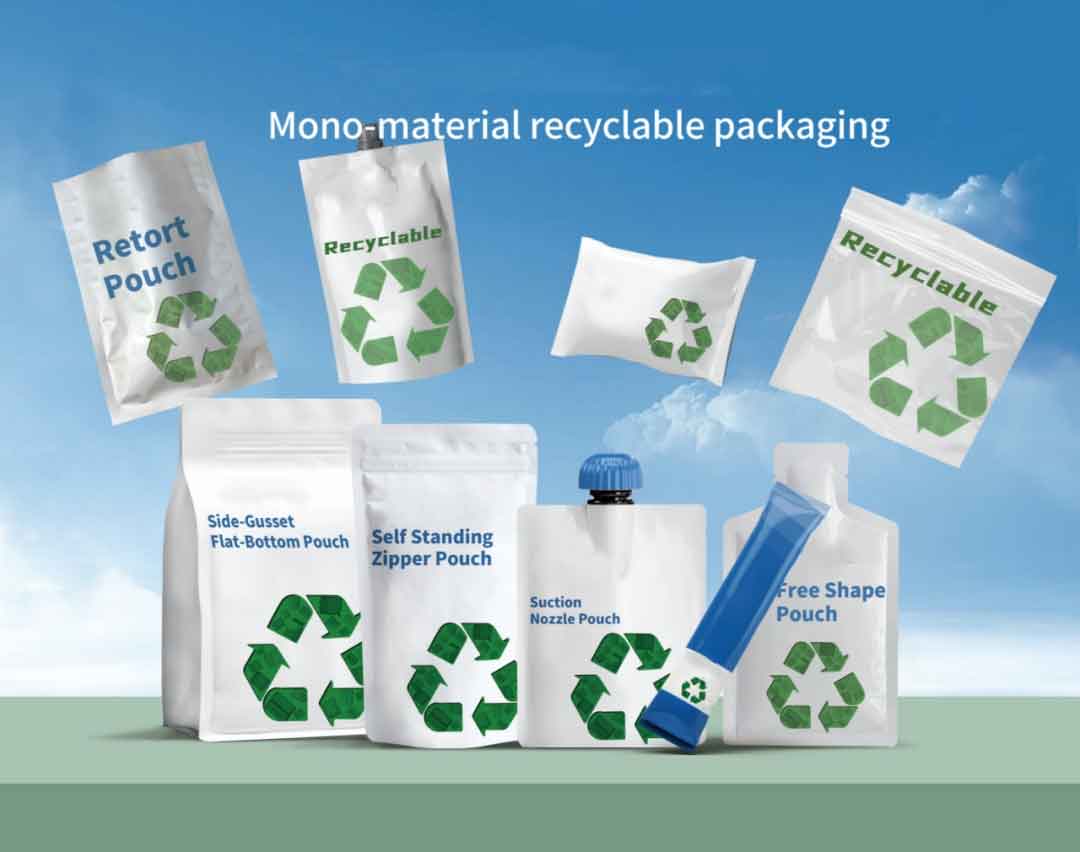
Mono-material pouches support a recycling-focused strategy, while compostable pouches can suit products with a suitable composting path. Sorbar can review both options with you and recommend a structure for your product and target market.
Which Pouch Should You Consider?
I do not suggest one pouch for every product. We first look at your product, your target market, and your filling process. Then we recommend a suitable structure.
| Pouch Option | Best Fit | What to Review |
|---|---|---|
| Mono-material pouch | Brands with a recycling-focused plan | Barrier needs, ink, label, closure, and target recycling stream |
| Compostable pouch | Products with a suitable composting path | Product protection, waste stream, collection system, and final treatment |
How Can Sorbar Support Your Project?
We are a direct factory, so we manage production on our own lines. Our team can customize the material, size, bag type, and artwork. We support the project from material selection to printing and bag making. We also use strict production and inspection standards to keep each batch consistent.
Planning mono-material or compostable pouches for the EU market? Contact Sorbar today. Tell us about your product and target market, and we will help you find a practical solution.
How Does PPWR Reduce Excess Packaging?
A large pack may look impressive on the shelf. Under PPWR, extra size can become a problem. You should now be able to justify every part of your pack.
Article 10 requires companies to reduce packaging weight and volume while keeping necessary functions. Marketing appeal or consumer acceptance alone cannot justify more packaging. PPWR also addresses excessive packaging and empty-space ratio through related rules and staged requirements.
How Does Packaging Minimisation Change Design?
In the past, many teams asked, "Is this package strong enough?" Now they must also ask, "Why do we need this much packaging?" The pack still needs to protect the product. But your team should be able to explain why each part is necessary.
Which Packaging Types May Feel the Impact?
| Packaging Type | Question to Review |
|---|---|
| Gift boxes | Does the box have unnecessary layers? |
| E-commerce packaging | Is the outer pack too large for the product? |
| Cosmetic packaging | Does the pack add weight only for visual effect? |
| Multi-layer packaging | Does each layer serve a clear function? |
| Large packs for small products | Can the pack become smaller? |
Why Is Empty Space Important?
Empty-space ratio refers to the empty space inside a package. This topic shows a major change in EU rules. The law now looks at both the material and the efficiency of the pack structure. So a pack with compliant substances, recyclable materials, and recycled content may still fall short of all PPWR requirements.
Why Do Packaging Suppliers Need to Share Data?
Your supplier may send a sample but little material data. This gap can stop your compliance work. You need a supplier that can support your documents.
Article 16 sets information duties for packaging suppliers and other related parties. Manufacturers need reliable data to prove substance compliance, material composition, and sound recyclable design. For this reason, data must flow from the raw material supplier to the final manufacturer.
How Does the PPWR Data Chain Work?
PPWR does not only affect brand owners and final product manufacturers. A manufacturer cannot prove compliance without good information from upstream partners. This creates a data chain across the packaging supply chain.
| Supply Chain Role | Example of Data to Pass On |
|---|---|
| Raw material supplier | Material and substance information |
| Packaging material supplier | Film structure and material composition |
| Packaging converter | Final pouch structure, inks, adhesives, and closures |
| Manufacturer | Compliance records for the final packaging |
What Should You Ask Your Supplier?
I suggest that you ask for data early, not after the order is complete. You can ask your supplier to confirm the pouch structure, the materials in each layer, and the printing and lamination materials. You should also ask how the supplier handles changes. This matters for OEM teams with many SKUs because one wrong file can affect several orders. It also matters for packaging engineers who need accurate data for their technical review.
What Logic Sits Behind PPWR?
Long lists of rules can hide the main idea. Teams may fix one issue and miss the bigger goal. The logic behind PPWR gives you a clearer path.
PPWR aims to move packaging away from a linear model of production, use, and disposal. It pushes companies toward reduction, reuse, recycling, and the return of recycled materials into new packaging. This logic connects the separate requirements in the law.
What Are the Seven Steps in the PPWR Logic?
At Sorbar, we use seven simple steps to explain this logic. You can use them to review any packaging project.
| Step | Key Question |
|---|---|
| Avoid | Can we avoid this packaging completely? |
| Reduce | Can the pack be lighter, smaller, or simpler? |
| Reuse or refill | Can the pack be used again? |
| Recycled content | How much recycled material can new packaging use? |
| Design for Recycling | Does the structure support effective recycling? |
| Collection and recycling | Will the used pack enter collection, sorting, and recycling systems? |
| EPR | Who carries the financial and management duties after use? |
How Can You Apply This Logic?
You can start with one product and walk through these seven questions with your team. First, I would remove any packaging that you do not need. Next, I would look for ways to reduce the size and weight. Then I would review reuse, recycled content, and recyclability. Last, I would confirm the collection path and EPR duties. This order helps your team see the whole packaging life cycle.
Conclusion
PPWR covers the full packaging life cycle and sets market access rules for the EU. Contact Sorbar to review mono-material or compostable pouch options for your compliance plan.
References
- Regulation (glossary), EUR-Lex, European Union.
- Regulation (EU) 2025/40 on packaging and packaging waste, Official Journal of the European Union, 22 January 2025.