Choosing the wrong box can raise your cost and hurt your brand. I see this often. This guide shows you 12 box types, so you can pick the right one fast.
The 12 common box types are the lid and base box, mailer box, book box, tuck end box, snap lock bottom box, drawer box, handle box, hanging box, window box, display box, shaped box, and rotating box. Each one fits a different product, budget, and sales channel.
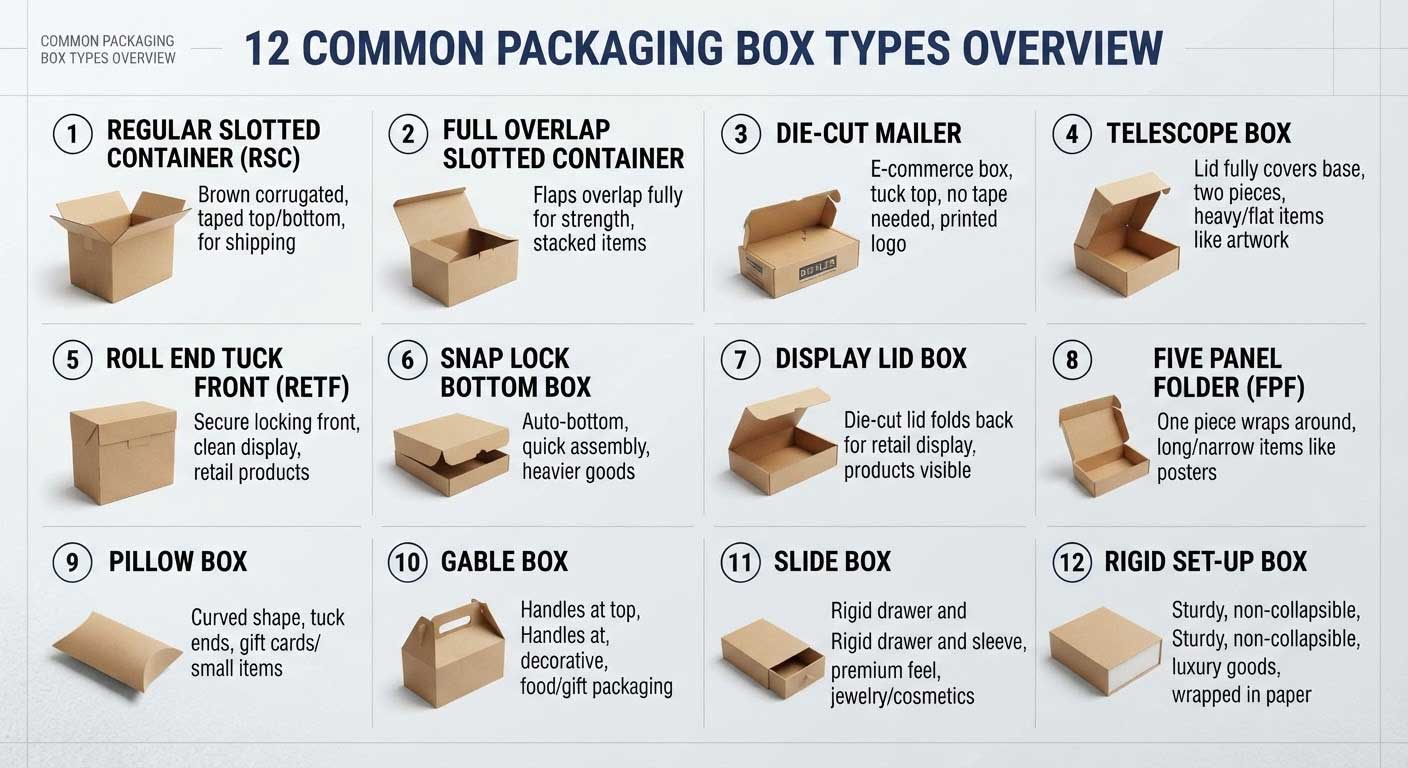
Do you know which box will protect your product and sell it at the same time? I work with packaging buyers every day. Many of them put the product in a pouch first. Then they put the pouch in a paper box for gifts, retail, or shipping. Choosing that outer box is often confusing, so I made this list. In each part, I explain the structure. I also list the good points and the weak points. I keep the words simple, so you can share this guide with your team. The last few box types are great for new product launches. Keep reading, because the right box can save you money on your very next order.
What Is a Lid and Base Box, and Is It Worth the Cost?
Your gift set looks cheap on the shelf. Buyers notice it fast. A lid and base box can fix that first impression and make your product feel special.
A lid and base box has two separate parts: a lid and a base. The lid is a little larger, so it fits over the base. It feels premium and gives a nice opening moment. The weak point is cost, because it uses more paper.

Where This Box Works Best
I see this box most often in gift sets. Clothing brands use it. Jewelry brands use it. Food brands use it for holiday gift boxes. The two-part design makes people slow down when they open it. This small moment builds value in the mind of the buyer.
Pros and Cons
| Point | Details |
|---|---|
| Look and feel | High-end, solid, and clean |
| Opening experience | Strong sense of ceremony |
| Best products | Clothing, jewelry, food gift sets |
| Cost | Higher, because it uses more paper |
| Storage | Takes more space before packing |
My Advice Before You Order
I always ask my clients one question first. Is this a gift product or a daily product? If it is a gift, this box is often worth the extra cost. If it is a daily product, the cost may not make sense. I also suggest you check the fit between the lid and the base. A loose lid feels cheap. A tight lid is hard to open. A good sample test solves this problem.
Why Is the Mailer Box So Popular for Shipping?
Your products arrive damaged, and customers complain. Returns eat your profit. A mailer box gives strong protection with a simple structure, and that is why so many brands use it.
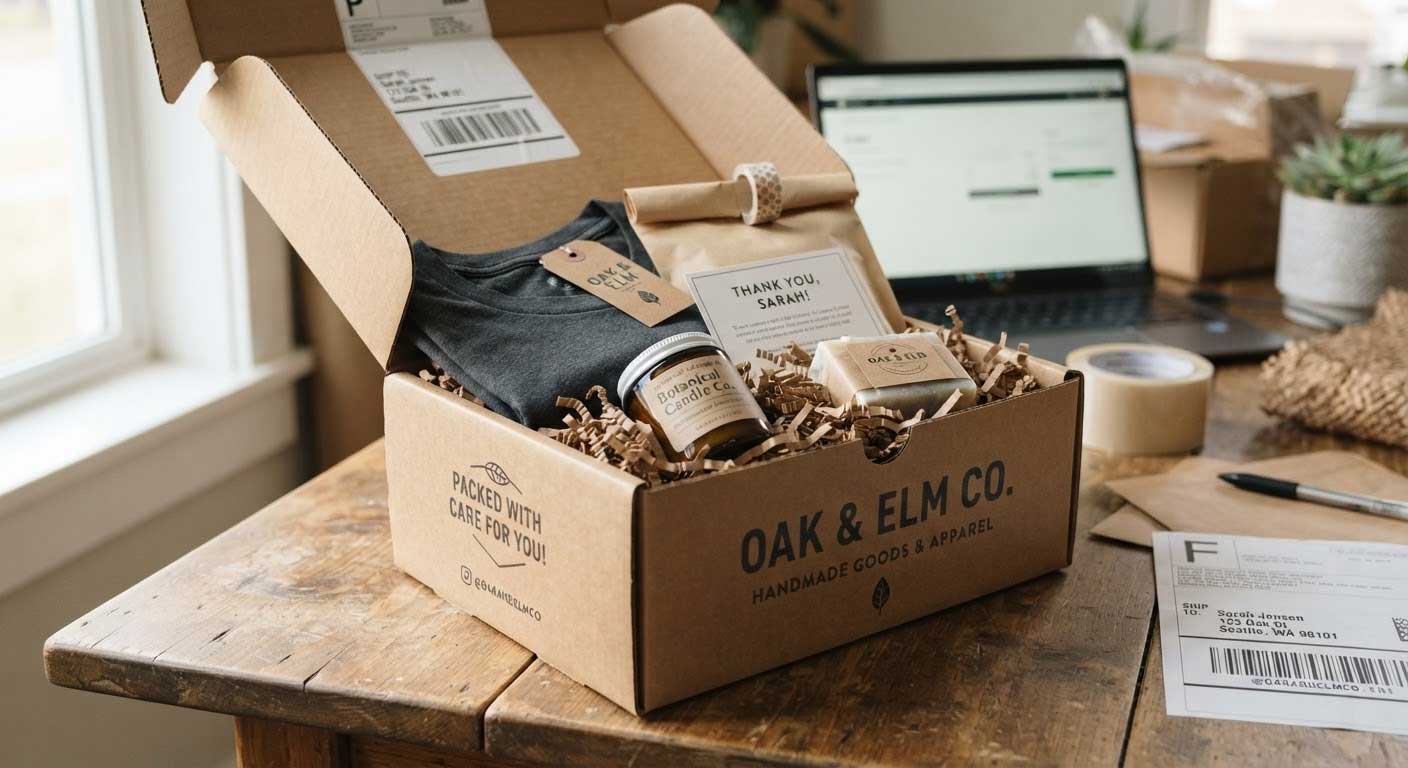
A mailer box gets its name from its open shape, which looks like a plane. It folds into one piece without glue. It is strong under pressure and easy to fold. The downside is that it is heavy, a bit bulky, and not good for complex printing.
Why Brands Love It
I see mailer boxes everywhere. Express parcels use them. Luxury brands use them too. The box folds from one flat sheet. The factory does not need to glue it. This saves labor cost. The structure is also strong, so it protects small and medium products during transport.
Pros and Cons
| Point | Details |
|---|---|
| Strength | Good resistance to pressure |
| Assembly | Easy to fold, no glue needed |
| Use range | From express parcels to luxury goods |
| Printing | Not good for complex designs or many colors |
| Weight and size | Heavier and bulkier, so shipping cost goes up |
What I Tell E-commerce Clients
Many of my e-commerce clients pack pouches inside mailer boxes. I tell them to think about freight cost first. A mailer box adds weight. This weight matters when you ship thousands of orders. I also tell them to keep the artwork simple. One or two colors look clean on this box. A busy design often prints poorly on corrugated board.
What Makes a Book Box Feel So High-End?
Your premium product needs a premium box. A plain box does not tell its story. A book box opens like a hardcover book, and it shows quality right away.
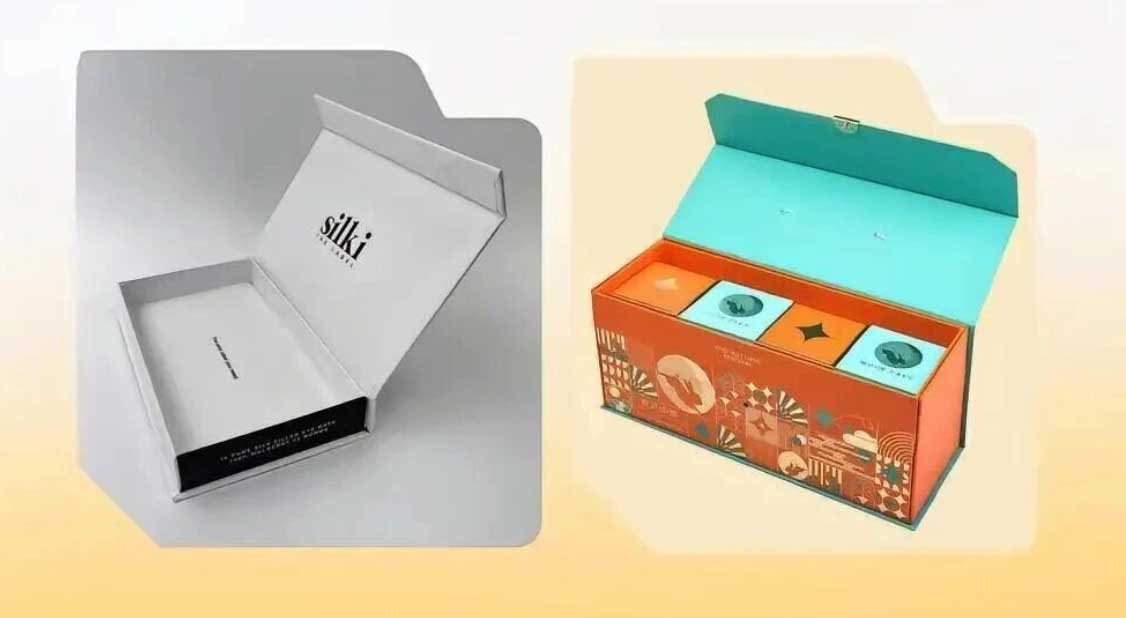
A book box looks like a book and opens from one side. It has an outer cover and an inner box. The base and back wall of the inner box stick to the cover. The top flap opens freely. Some book boxes use magnets to close.
How the Structure Works
I like to explain this box with a simple picture. Think of a hardcover book. The outer cover wraps around the inner box. The bottom and the back of the inner box are glued to the cover. The front flap is not glued, so it opens like a book cover. Many brands add a magnet or a thin metal sheet. This keeps the box closed with a soft click.
Pros and Cons
| Point | Details |
|---|---|
| Look and feel | Very premium, like a hardcover book |
| Closing | Can use magnets for a neat close |
| Best products | High-end gifts, tea, cosmetics, electronics |
| Cost | High, because of rigid board and extra parts |
| Production | More steps, so lead time is longer |
My Tip on Book Boxes
I suggest you plan the lead time early. This box needs more hand work. It also needs more material. If your launch date is tight, you should confirm the timeline before you confirm the design. I have seen good projects get delayed because of this one point.
Is the Tuck End Box Still a Smart Choice Today?
You need a simple box at a low price. Fancy boxes cost too much. The tuck end box is the oldest and simplest paper box, and it is still very useful today.
A tuck end box has the same tuck flaps on the top and bottom. It is die-cut, glued on one side, and then folded. It is cheap and easy to make. It fits small, light products. The weak point is that it looks common and does not stand out.

Where You See It Every Day
I see this box in every supermarket. Toothpaste comes in it. Cosmetics come in it. Medicine comes in it. People call it the "ancestor" of paper boxes. The structure is very basic. This makes it fast to produce and easy to pack.
Pros and Cons
| Point | Details |
|---|---|
| Production | Simple process, low difficulty |
| Price | Low cost per unit |
| Best products | Small, light items |
| Look and feel | Basic, not very premium |
| Brand impact | Very common, so it is hard to stand out |
How I Help Clients Make It Look Better
I often tell clients that a simple box does not need to look boring. You can add hot stamping. You can add spot UV. You can use a special paper. These small details make a big difference. I also remind them about weight. This box is not strong at the bottom. If your product is heavy, the next box type may fit better.
How Is a Snap Lock Bottom Box Different from a Tuck End Box?
Your box bottom opens, and the product falls out. That is a real risk with heavy items. A snap lock bottom box solves this with a stronger base.
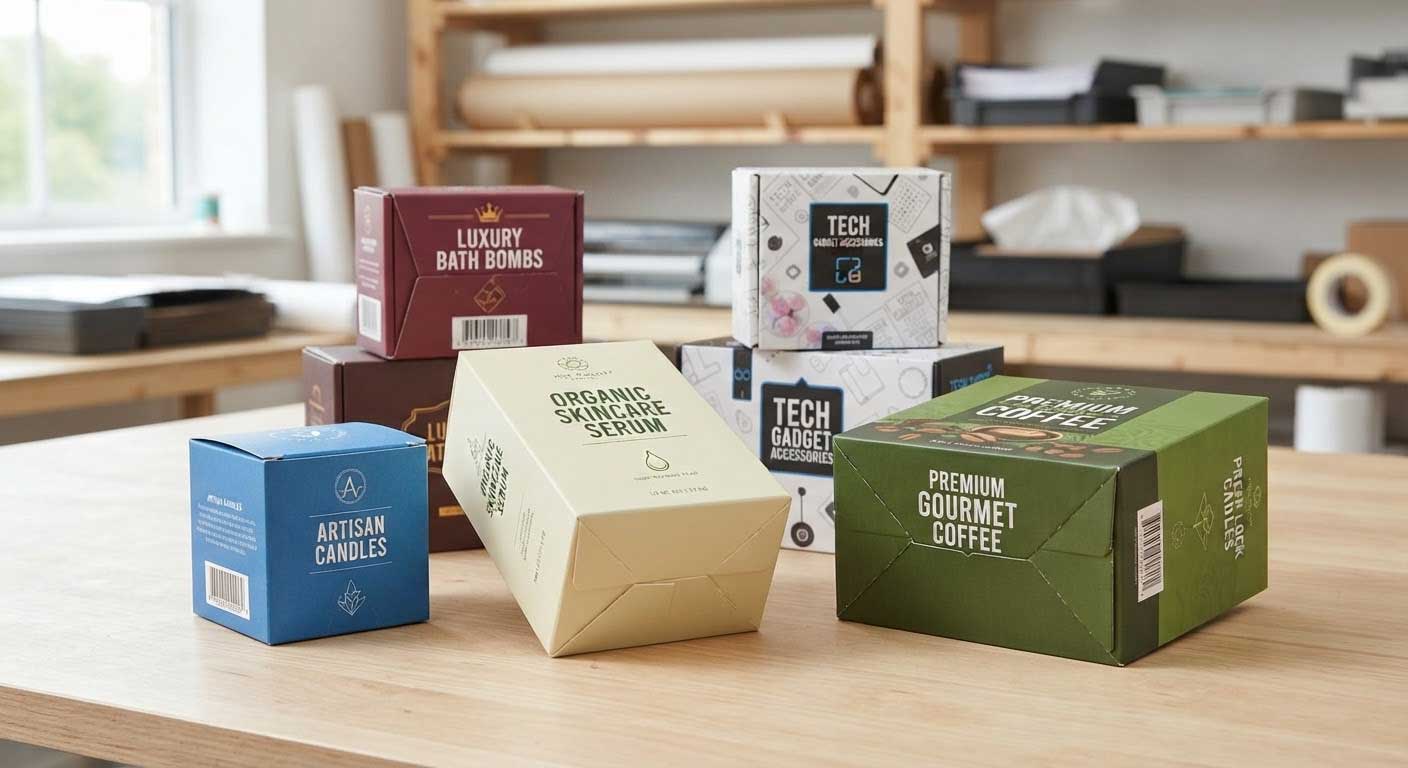
A snap lock bottom box has a tuck flap on top and a locking base on the bottom. From the outside, it looks like a tuck end box. The difference shows when you open it flat. The locked bottom holds more weight, so it suits heavier products.
Why the Bottom Matters
I tell my clients to look at the flat layout. The top part is the same as a tuck end box. The bottom part is different. The bottom flaps fold and lock into each other. This creates a firm base. The box can carry more weight without opening.
Tuck End Box vs Snap Lock Bottom Box
| Point | Tuck End Box | Snap Lock Bottom Box |
|---|---|---|
| Top | Tuck flap | Tuck flap |
| Bottom | Tuck flap | Locking base |
| Weight capacity | Low | Higher |
| Best products | Light items | Heavier items, bottles, jars |
| Packing speed | Fast | Fast, after a little practice |
My Practical Advice
I suggest this box for glass jars, bottles, and heavy pouches. A tuck end bottom can open under the weight of glass bottles during packing, while a snap lock bottom holds much better. The cost difference is small. The safety gain is large. For heavy products, I think this is an easy choice.
Why Do Brands Choose a Drawer Box?
Your product needs to feel solid and special. A thin box feels weak. A drawer box slides open like a small drawer, and it feels strong in the hand.
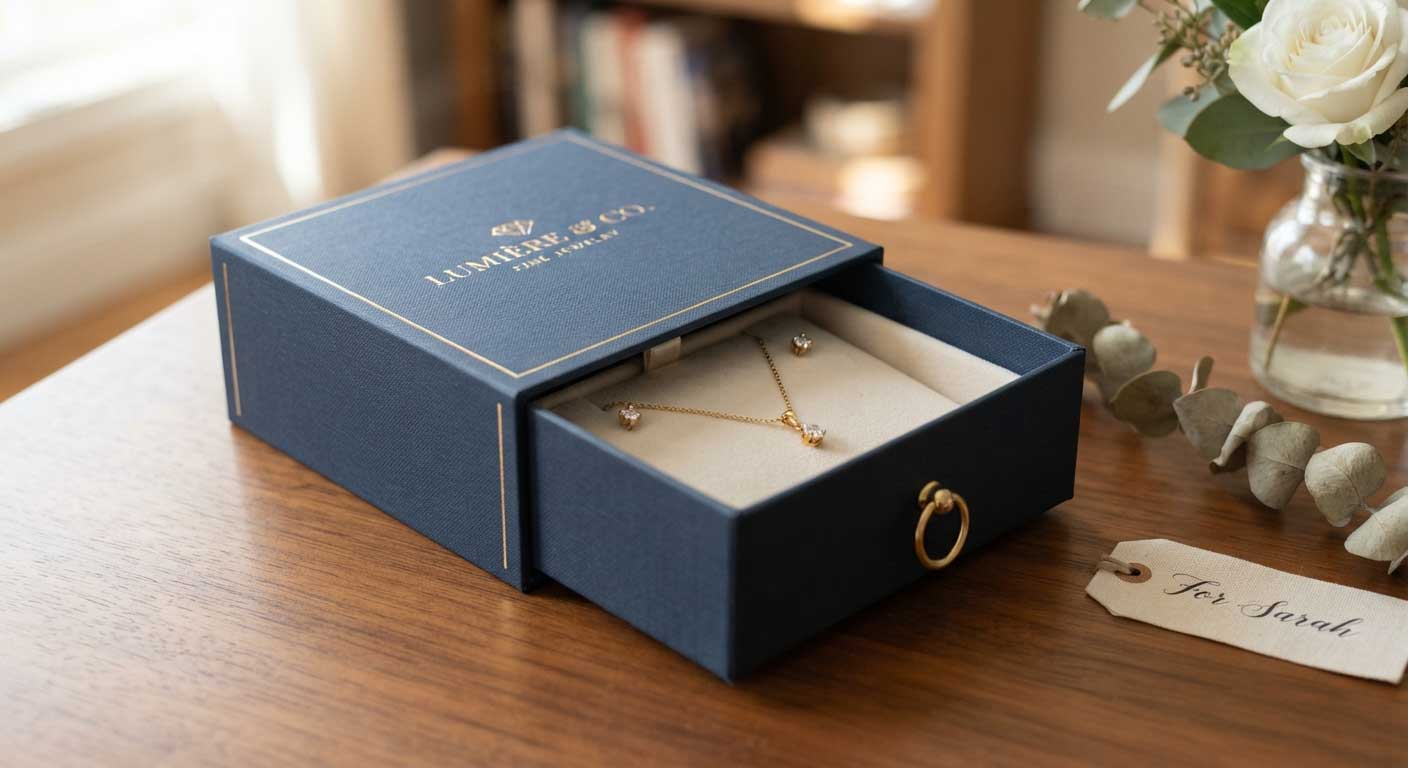
A drawer box has an outer sleeve and an inner tray. You open it by sliding the tray out. The sleeve can open on one side or both sides. The double layer makes it strong. It feels premium, but it uses more paper and costs more.
How It Works
I like the drawer box because it is easy to use. You hold the sleeve. You push the tray. The product slides out. The sleeve can have one open end or two open ends. The two layers give extra strength. This protects fragile products well.
Pros and Cons
| Point | Details |
|---|---|
| Structure | Double layer, solid and firm |
| Opening | Smooth sliding action |
| Look and feel | Premium, similar to a lid and base box |
| Cost | Higher, because it uses more paper |
| Best products | Jewelry, chocolate, tea, small gifts |
What I Check in Samples
I always check the slide. If the tray is too tight, it gets stuck. If it is too loose, it falls out. I also suggest adding a ribbon or a thumb cut. This helps people pull the tray out easily. These small details improve the user experience a lot.
When Should You Use a Handle Box?
Your customers buy gifts and need to carry them. A plain box is hard to hold. A handle box lets people grab and go, and that is why it fits gift shopping.
A handle box has a locked bottom for weight and a handle on top for carrying. It often uses corrugated board for strength. It is common for gift sets and souvenirs. The key is to match the handle with the product size and weight.

Why It Fits Gift Shopping
I see handle boxes most often at holidays. People buy local gifts. People buy fruit boxes. People buy snack sets. They want to carry the box with one hand. The handle makes this easy. The locked bottom keeps the weight safe.
Pros and Cons
| Point | Details |
|---|---|
| Carrying | Very easy to carry |
| Strength | Good, especially with corrugated board |
| Best products | Gift sets, fruit, snacks, souvenirs |
| Risk | Handle can tear if the product is too heavy |
| Design | Needs careful testing of size and material |
My Warning About Handles
I always remind clients to test the handle. The product weight must match the handle design. The board thickness must match too. A drop and lift test with the real product quickly shows whether the handle and board are strong enough. Testing early saves you from bad reviews later.
Why Is the Hanging Box Great for Retail Shelves?
Your small product gets lost on a crowded shelf. Shoppers walk past it. A hanging box puts your product at eye level, and it saves shelf space at the same time.
A hanging box has a hang hole on top, so the store can hang it on hooks. It suits small items like batteries, stationery, toothbrushes, and earphones. It can be simple or premium. Its main benefit is good shelf display without taking up space.

Where It Works Best
I see hanging boxes in supermarkets and convenience stores. Fast-moving goods use them a lot. The store hangs them on metal hooks. The product sits at a good angle and height. Shoppers can see it quickly. This helps impulse buying.
Pros and Cons
| Point | Details |
|---|---|
| Display | Great position and angle on the shelf |
| Space | Saves shelf space |
| Best products | Batteries, stationery, toothbrushes, earphones |
| Cost | Flexible, from basic to premium |
| Limit | Not good for heavy or large products |
My Advice on Hanging Packs
I tell clients to check the hang hole strength. A weak hole can tear. I also suggest checking the store hook size before you finalize the design. Different stores use different hooks. By the way, many of my clients use pouches with hang holes for the same purpose. A pouch can be lighter and cheaper for snacks and small parts.
How Does a Window Box Help Sell Your Product?
Shoppers want to see what they buy. A closed box makes them guess. A window box shows the real product, and that builds trust right away.
A window box has a cut-out window, often covered with clear film. Customers can see the product inside. This makes the product more trustworthy. Window shapes can vary a lot. It is common for wine, farm products, and food.

Why a Window Builds Trust
I think the window box is very honest packaging. The customer sees the real color. The customer sees the real size. There is no surprise. This builds trust, especially for food. People like to see fresh nuts, dried fruit, or cookies before they buy.
Pros and Cons
| Point | Details |
|---|---|
| Visibility | Shows the real product inside |
| Trust | Increases buyer confidence |
| Design | Many window shapes are possible |
| Best products | Wine, farm products, snacks, baked goods |
| Risk | Product must look good, because people see it |
My Tip on Window Design
I tell clients that the window is a promise. If the product looks messy, the window hurts sales. You should check how the product sits inside. You should also choose a clear, strong film. Window pouches follow the same idea. Many of my food clients use window stand-up pouches for this reason.
What Makes a Display Box a Strong Sales Tool?
Your product sits in a row with many others. It is hard to stand out. A display box turns your package into a mini stage for your brand.
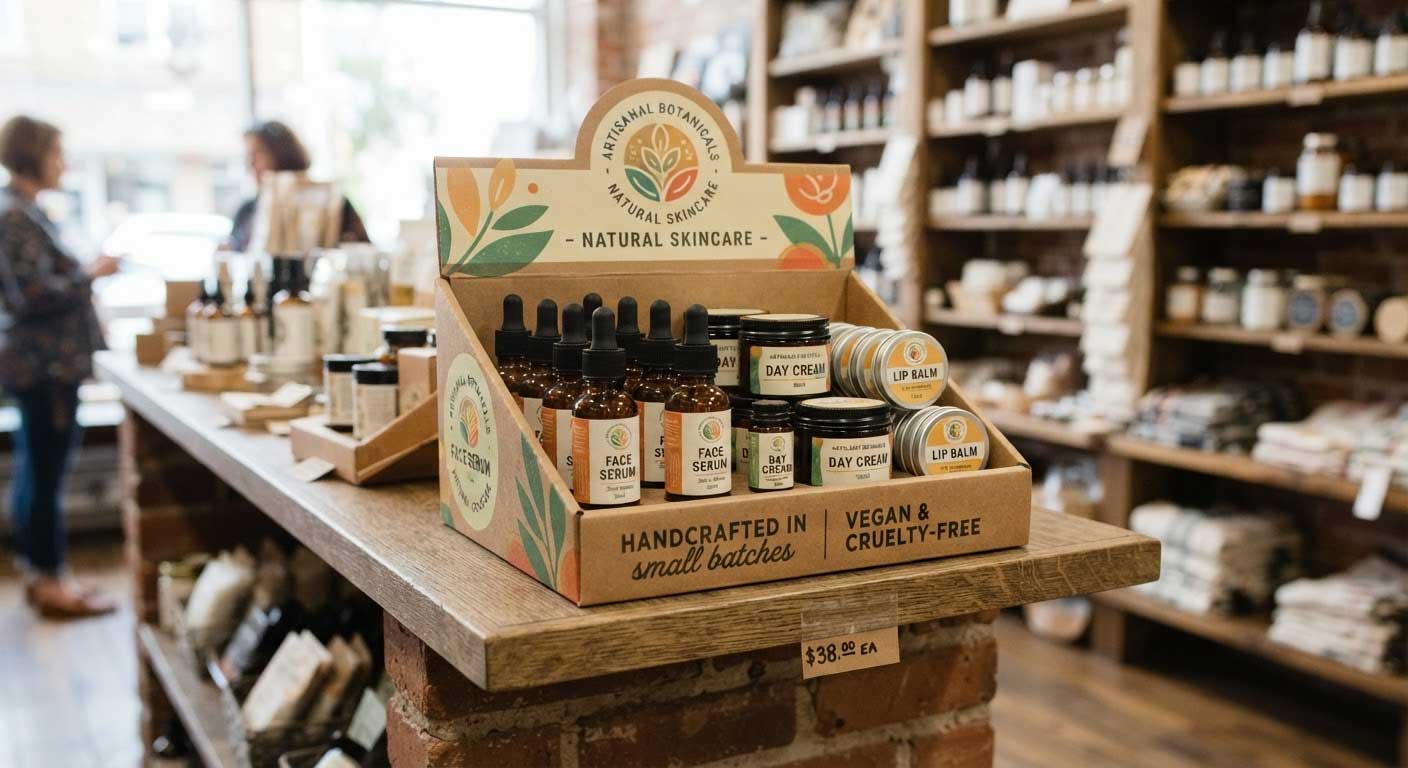
A display box is made to show products on a counter or shelf. Its background is a great place for brand messages and creative visuals. It is common in beauty counters. It attracts shoppers, adds value, and builds a strong brand image.
Why Display Matters
I believe the first thing shoppers notice is often a display box. It stands on the counter. It shows the products in a neat way. The back panel can tell a story. You can add your logo, a key message, or a fun picture. This makes the brand easy to remember.
Pros and Cons
| Point | Details |
|---|---|
| Attention | Catches the eye fast |
| Branding | Large space for brand story and visuals |
| Value | Adds perceived value to the product |
| Best products | Cosmetics, snacks, small retail items |
| Limit | Needs counter or shelf space in stores |
How I See It Used
I often see display boxes hold small pouches. Snack brands use them for sample packs. Beauty brands use them for sachets. The box sells. The pouch protects. This combo works well for new brands that want quick attention in stores.
Why Are Shaped Boxes So Popular with Young Brands?
Standard boxes all look the same. Young buyers scroll past them. A shaped box breaks the normal form, and it gives your brand a fresh and fun look.
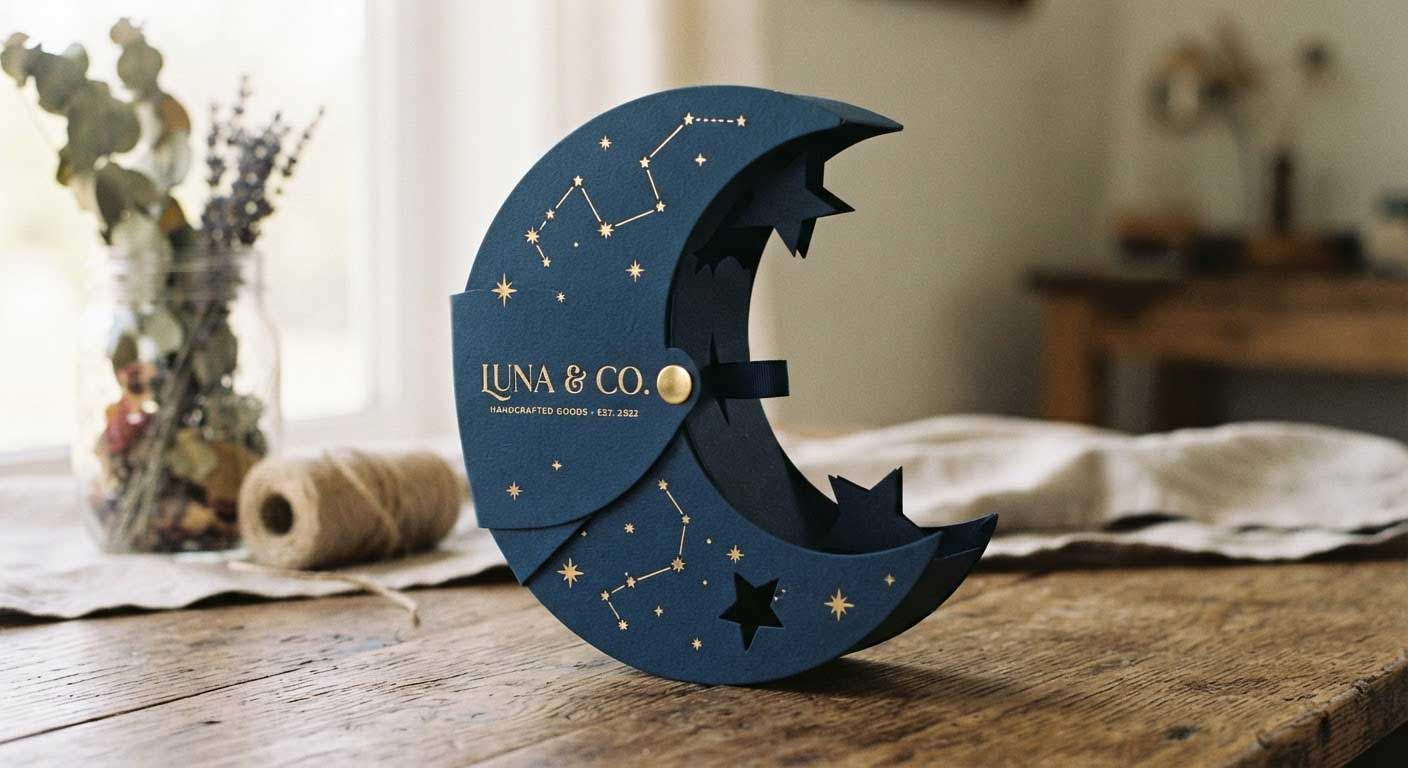
A shaped box uses a special structure or outline instead of a normal square shape. It looks young and fun. It is common for trendy brands, toys, and gifts. It catches attention, but it needs more creative design and harder production work.
What Makes It Different
I see more shaped boxes every year. The design changes the faces of the box. It changes the shape, the number of sides, or the direction. Some shaped boxes are simple. They only have a front and a back to design. Others are very complex.
Pros and Cons
| Point | Details |
|---|---|
| Look | Unique and eye-catching |
| Style | Young and trendy |
| Best products | Trendy brands, toys, gifts |
| Design | Needs strong creative ideas |
| Production | Harder to make, may cost more |
My Advice for Startup Brands
I tell new brand founders to start with a simple shaped design. A simple outline still stands out. It is also easier to produce. You should make a sample first. A sample shows if the shape holds the product well. Shaped pouches follow the same rule. They look great, but the structure must still work.
What Is a Rotating Box, and Why Does It Feel So Clever?
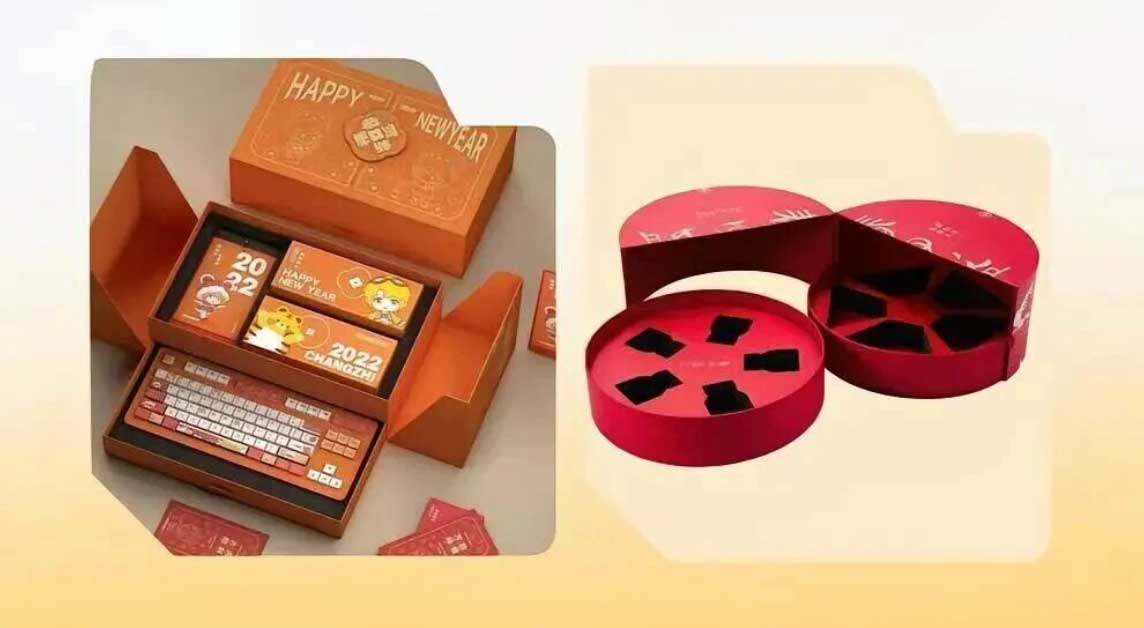
Your product deserves a memorable unboxing. A normal box opens the same way every time. A rotating box turns to reveal the product, and people love that surprise. A rotating box opens by turning or swiveling to show the product. It protects the product when closed. It shows the product when open, without extra stands. It is easy to use, looks smart, and helps a product stand out from similar items.
How It Works
I find the rotating box very clever. The box turns at a set point. When you rotate it, the product appears. When you turn it back, the product is safe inside. It does both jobs. It protects. It displays. You do not need a separate display stand.
Pros and Cons
| Point | Details |
|---|---|
| Opening | Fun, smart, and memorable |
| Function | Protects and displays in one box |
| Convenience | Easy to take out and put back |
| Value | Shows product value and boosts competitiveness |
| Design | Needs precise structure design |
When I Suggest It
I suggest this box for brands that want a strong first impression. It works well for gifts, cosmetics, and limited editions. It can lower cost in some cases, because it removes the need for an extra display stand. You should still test the turning point. A weak turn point can break after repeat use.
Conclusion
Each box type serves a different goal. I suggest you match the box to your product, budget, and sales channel. Then you test samples before your bulk order.
References
- Folding carton, Wikipedia.
- The impact of transparent packaging: how transparent packaging for organic foods affects tourists' green purchasing behavior, Frontiers in Nutrition, 2024.
- Measuring the Value of Point-of-Purchase Marketing with Commercial Eye-Tracking Data, INSEAD working paper, 2007.
- The Impact of Visual Elements of Packaging Design on Purchase Intention: Brand Experience as a Mediator in the Tea Bag Product Category, Behavioral Sciences, 2025.
